
Bitcoin Short Squeeze Explained: Inside the $648M Sept 21 Wipeout

 Prefer us on Google


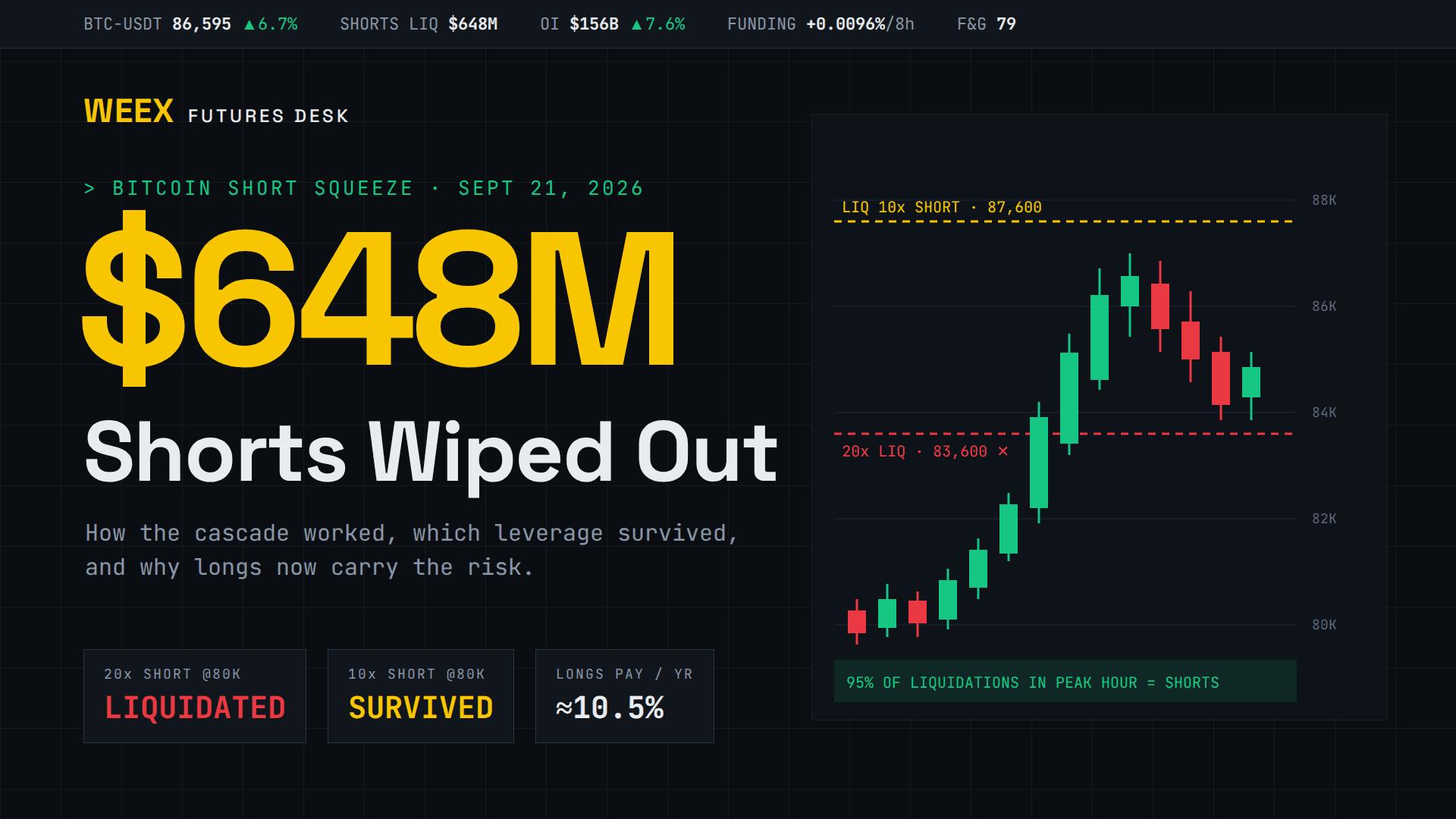
The bitcoin short squeeze of September 21, 2026 forced out about $648 million in bearish crypto bets within 24 hours. BTC rose above $85,000 for the first time since January. Short positions made up roughly 84–87% of the $746.6 million liquidated that day. More than $277 million of those were BTC shorts, and ether shorts added another $122.8 million. This piece explains how a short squeeze becomes a liquidation cascade and which leverage levels survived the move. It also covers why the risk has now shifted to longs, and how to short bitcoin without becoming part of the next squeeze.
What Happened in the Bitcoin Short Squeeze on Sept 21
Traders who had built short positions through mid-September were leaning against a market that had held above $75,000. That floor held through a Federal Reserve hike, a Bank of Japan hike to a 31-year high, and the Senate's rejection of the Clarity Act. When the 10-year Treasury yield slipped back below 5% and crude oil eased, buyers stepped in.
The move itself was fast:
- BTC broke above its September 4 high of $82,284 and peaked near $85,000 on Monday, Sept 21. By the daily close it reached about $86,595, up 6.7% on the day and the highest close since January 28.
- In one hour at the height of the move, $159.9 million of positions were liquidated, and 95% of them were shorts.
- Total crypto futures open interest rose 7.59% to about $156 billion, and 24-hour trading volume jumped 39% to $224 billion.
- The rally spread across the market: 95 of the CoinDesk 100 constituents finished higher. SUI gained 21.4%, AVAX 14.1% and DOGE 10.2%.
Spot demand added to the move. U.S. spot bitcoin ETFs took in about $999 million in net inflows on September 21, the largest single day of 2026. BlackRock's IBIT led with $381.4 million.
How a Short Squeeze Turns Into a Liquidation Cascade
A short squeeze is a rising market that forces short sellers to buy back what they sold. In crypto perpetual futures, most of that buying is not a choice. It happens automatically when positions hit their liquidation price.
The chain runs like this:
- Price rises through a crowded level. Many shorts had stops or liquidation prices clustered just above the $82,284 high from September 4.
- Liquidation engines buy to close. Closing a liquidated short means a market buy, which pushes the price up further.
- The next cluster triggers. Each forced buy moves the price into the next group of liquidation prices, and the moves feed each other. This is why $159.9 million could be liquidated in a single hour.
- Momentum runs out. Once the most heavily leveraged shorts are gone, forced buying stops. Price usually stalls or pulls back. On Sept 22 BTC gave back 0.46%, and on Sept 23 it traded about 2% lower, near $84,400.
The key point is that squeezes are driven by where positions sit more than by news. A macro headline may start the move, but leverage decides how far it goes.
Which Leverage Survived the Squeeze?
Take a trader who shorted BTC at $80,000 on isolated margin shortly before the rally. A simplified liquidation price for a short is:
Liquidation price ≈ entry × (1 + 1/leverage − maintenance margin rate)
With an illustrative 0.5% maintenance margin:
- 20x short: liquidation near $83,600, only 4.5% above entry. BTC crossed that level on Sept 21, so the position was closed and the margin lost.
- 10x short: liquidation near $87,600. BTC's high was about $86,750, so the position survived with little room to spare. By then its unrealized loss was more than 80% of the margin.
- 5x short: liquidation near $95,600. The position survived with room left, though it still showed a large unrealized loss.
The trader was equally wrong about direction in all three cases. Leverage alone decided whether they were forced out at the top of the move. At 20x, a 4–5% daily move is enough to liquidate you, and BTC made one in a single session.
Exact liquidation prices on WEEX depend on the pair's maintenance margin tiers, position size and fees. The live BTC-USDT perpetual on WEEX shows your estimated liquidation price before you confirm an order.
-- Price
After the Squeeze: Why Longs Are Now the Crowded Side
After a squeeze, open interest usually falls as shorts are closed. This time it went the other way. As of Sept 21, 21:56 UTC:
- Funding was positive on 24 of the 25 largest BTC perpetuals. On OKX, BTC-USDT funding was 0.0096% per 8 hours, and the median across venues was 0.00594% per settlement.
- That works out to roughly 10.5% a year for longs at the OKX rate (0.0096% × 3 × 365), paid to the short side just to keep a position open.
- BTC futures open interest climbed to about $61.1 billion (up 7.7%) by Sept 23. At the same time, the Fear & Greed Index read 79 ("Extreme Greed"), and daily RSI was near 80.
Rising open interest, positive funding and overbought momentum mean new leveraged longs have piled in above $84,000. Last week the shorts were the crowded trade; now it is the longs. The same cascade can run in reverse as a long squeeze if BTC loses the $84,000–$84,400 support zone. For a primer on reading this signal, see WEEX's explainer on bitcoin's funding rate and why it matters.
In practice, squeeze risk swings to whichever side is paying funding. Check the funding rate and open interest before you check the headlines.
How to Short Bitcoin Without Getting Squeezed
Shorting BTC is a legitimate hedge or trade. The losses on Sept 21 came from how the positions were built, not from being short at all. A checklist that would have kept most of those positions alive:
- Size by the stop, not by the leverage slider. Decide where you are wrong, for example above a prior high, and size the position so that hitting that stop costs 1–2% of your account. Then pick the lowest leverage that fits that size.
- Keep liquidation well beyond your stop. If the liquidation price is closer than the stop, the exchange closes the position before your own exit does.
- Don't short into negative funding and falling open interest. When shorts are already paying funding, the trade is crowded, and crowded trades are what squeezes feed on.
- Avoid obvious levels. Stops placed a few dollars above a well-known high, such as $82,284, sit in the same cluster the market will run through.
- Use isolated margin for directional bets. A squeezed short on isolated margin loses only its own margin. On cross margin it can draw on the rest of your account.
- Set the stop when you open the trade. WEEX's take-profit and stop-loss guide explains the choice between last price and mark price triggers, which matters most in fast moves like this one.
The September 21 bitcoin short squeeze did not end the bearish case for BTC. What it did was remove the traders who were too leveraged. The next squeeze, in either direction, will again hit whichever side has the most leverage.
FAQ
1. What is a bitcoin short squeeze?
It is a sharp BTC rally that forces short sellers to buy back their positions, either voluntarily or through liquidation. That buying pushes the price higher still. On Sept 21, 2026, it liquidated about $648 million in crypto shorts.
2. Why did bitcoin squeeze shorts on September 21, 2026?
BTC broke above its $82,284 September high while shorts were concentrated just above that level. Falling Treasury yields, softer oil and record ETF inflows helped start the move, and liquidations amplified it.
3. What leverage is safe for shorting bitcoin?
No leverage is safe on its own terms. At 20x, a move of about 4.5% against you can trigger liquidation, and BTC moved more than that in one day. Size the position from your stop-loss first, then use the lowest leverage that fits.
4. Can a long squeeze follow a short squeeze?
Yes. After Sept 21, open interest rose and funding turned positive on most BTC perpetuals, which means new leveraged longs entered. If support breaks, their liquidations can drive a fast move down.
Risk Warning
Crypto futures are leveraged products, and you can lose part or all of your margin quickly. Short squeezes and long squeezes can move prices several percent within minutes. Liquidation can then happen before a stop-loss executes, especially when slippage is high. Funding payments add to the cost of holding a position. Maintenance margin tiers and the gap between mark price and last price affect when a position is liquidated. Examples in this article are simplified illustrations, not trading advice. Only trade with money you can afford to lose.
This content is provided for general informational purposes only and doesn't constitute financial, investment, legal, or tax advice. Any events, rewards, online promotions, or related information mentioned herein should not be considered a recommendation, solicitation, or invitation to purchase, sell, trade, or otherwise deal in any crypto assets. Crypto assets are highly volatile and may result in loss. The availability of WEEX services, products, and related events may vary by region. You are responsible for ensuring that your participation is in accordance with applicable local laws and regulations.
You may also like

Best Crypto Cold Wallet 2026: Top Picks Matched to How You Hold
INJ Meridian Upgrade: What Activates Sept 24 and What to Watch

Phantom Wallet vs MetaMask: What's the Difference

How to Connect Phantom Wallet to a Solana DApp
How to Install and Set Up Phantom Wallet

What Is Phantom Wallet? A Complete Guide to the Solana Wallet
Funding Rate Crypto: What BTC and ETH Are Paying Right Now
Crypto Liquidation: The Exact Price That Wipes Out Your Position
INTC Stock Surged 14%: Intel Only Has Enough Chips for Half Its Clients
Hyperliquid vs Centralized Exchanges: What's the Difference?
FreeBitco.in Has Shut Down: What Users Should Know
NEAR Futures Take-Profit and Stop-Loss: Managing a Parabolic Move
ARB Futures After a 60% Week: Leverage, Isolated Margin and PnL
Bitcoin Funding Rate After a $648M Short Squeeze: What Longs Pay
What Is Blockchain Technology? Follow One Transaction to See

Pi Network vs Other Mobile Mining Projects: What's the Difference
Is Pi Network Legit, or Is It Considered a Scam?
What a Blockchain Explorer Can and Cannot Tell You
Iberdrola Stock: What to Watch Ahead of the October 21 Earnings Report
Stop Loss in Crypto Futures: How to Set TP/SL That Survives Wicks
Funding Rate Explained: How Perpetual Futures Fees Hit Your PnL
Crypto Liquidation Explained: Why $300M in Longs Got Wiped Out
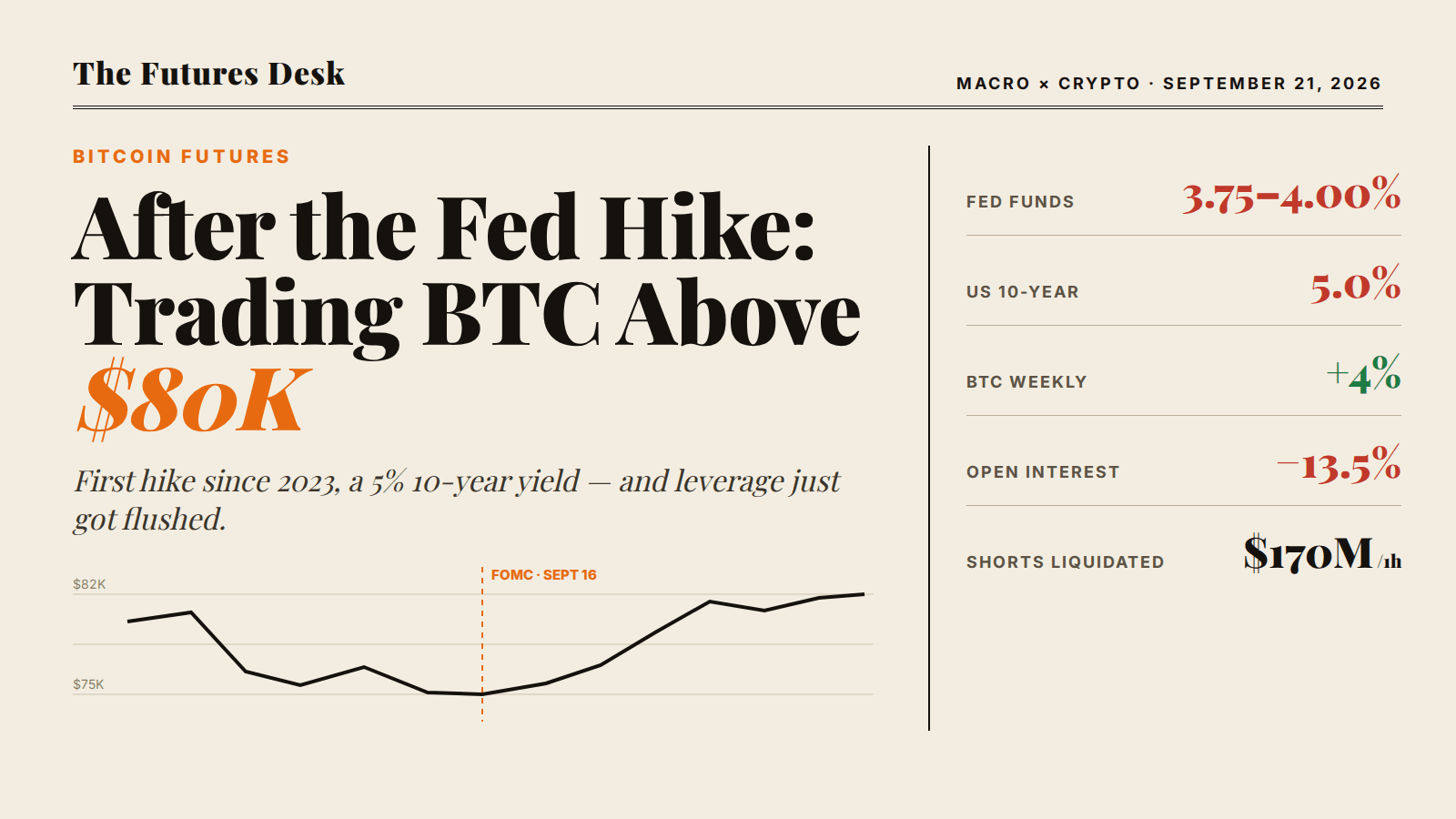
Bitcoin Futures After the Fed Hike: How to Trade BTC Above $80K
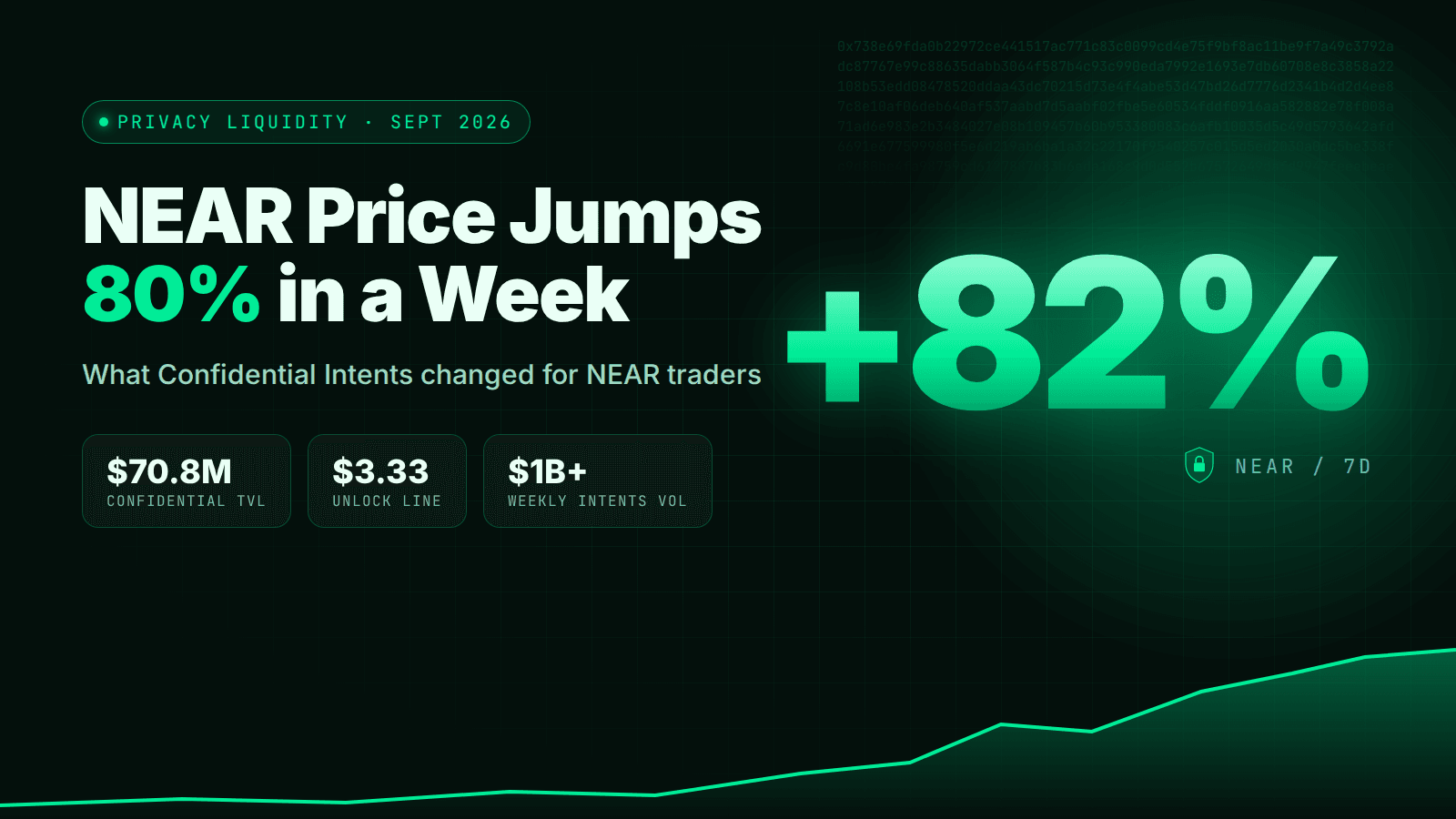
NEAR Price Jumps 80% in a Week: What Confidential Intents Changed
How to Verify a Crypto Transaction With a Blockchain Explorer?
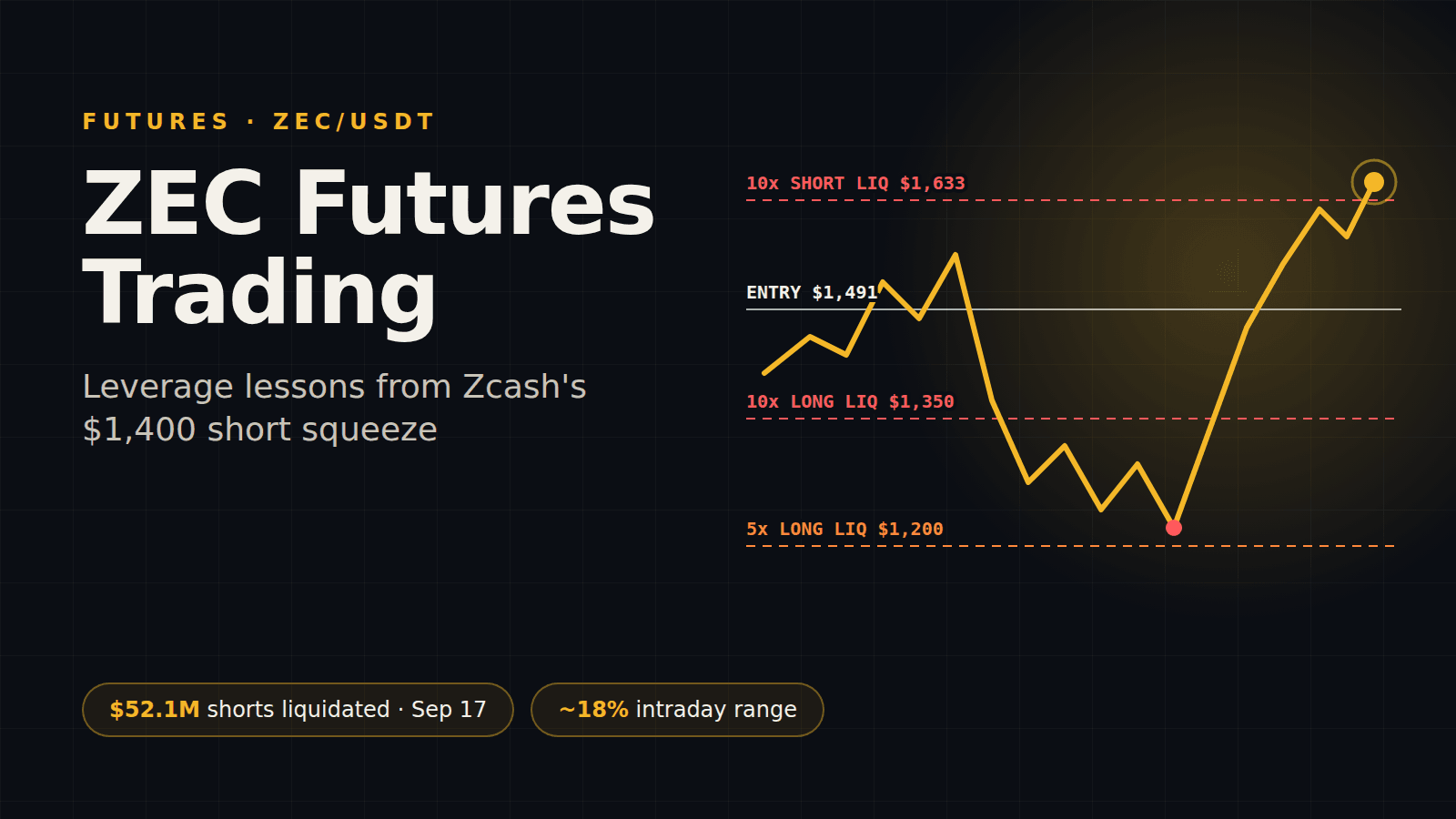
ZEC Futures Trading: Leverage Lessons From Zcash's $1,400 Squeeze
BTC Futures Trading on WEEX: Claim BTC Rewards Before Sep 25

Circle's Arc Mainnet Is Live: Can It Actually Close the Gap With Tether's USDT?

Why Did the CLARITY Act Fail in the Senate, and What Happens Next for Crypto Regulation?
Lighter (LIT) Futures: Cross vs Isolated Margin on a 17% Range
Best Crypto Cold Wallet 2026: Top Picks Matched to How You Hold
INJ Meridian Upgrade: What Activates Sept 24 and What to Watch
Phantom Wallet vs MetaMask: What's the Difference
How to Connect Phantom Wallet to a Solana DApp
How to Install and Set Up Phantom Wallet
What Is Phantom Wallet? A Complete Guide to the Solana Wallet


