
Japan Crypto Tax 2025: A Complete Guide

 Prefer us on Google

Navigating cryptocurrency taxes in Japan can feel overwhelming, even for seasoned investors and traders. With regulations evolving rapidly and stringent enforcement mechanisms in place, it’s crucial for anyone involved in crypto to understand their tax obligations in 2025. This thorough guide demystifies Japan’s cryptocurrency tax landscape—including tax rates, taxable events, reporting methods, common pitfalls, guidance for DeFi users, and how to simplify your filings using robust tools like the WEEX Tax Calculator. Whether you are an occasional trader, DeFi enthusiast, or earn regular income in cryptocurrency, you’ll find actionable insights and practical examples to help you stay compliant and optimize your tax outcomes.
Do You Pay Cryptocurrency Taxes in Japan?
If you’ve bought, sold, traded, or earned any form of cryptocurrency in Japan, you are potentially subject to taxation. Japan’s National Tax Agency (NTA) classifies cryptocurrencies as property, and any profits or income derived from their use must be reported as “miscellaneous income.”
Who Must File Crypto Taxes?
Japan’s crypto tax regime casts a wide net, affecting residents, non-residents, and non-permanent residents:
- Residents and citizens: Required to report worldwide income, including all crypto gains.
- Non-permanent residents: Generally taxed at 20.42% on crypto income sourced within Japan.
- Non-residents: Taxed on income earned from Japanese sources; global income may not be subject unless remitted to Japan.
Income Threshold: If your combined crypto and employment income is less than 200,000 JPY in the tax year, you do not need to file a return for crypto, unless you are also applying for certain other deductions like medical expenses or the hometown tax program (furusato nozei). However, if you cross that threshold, all taxable crypto events must be reported.
What Types of Crypto Income Must Be Reported?
Japan’s NTA requires you to report a comprehensive list of crypto activities, including but not limited to:
- Selling crypto for fiat currency (e.g., JPY or USD)
- Trading one cryptocurrency for another (Bitcoin to Ethereum, for example)
- Using crypto to purchase goods or services
- Receiving crypto as mining, staking, DeFi, or airdrop rewards
- Salary or compensation paid in crypto
- Bonuses, referral incentives, or affiliate rewards in crypto
- Gifting cryptocurrency
These transactions can occur through personal wallets or via exchanges—both domestic and international.
Real-World Example:
If you purchased 0.5 BTC for 2,000,000 JPY and, later in the year, sold it for 2,400,000 JPY, you’d have a taxable gain of 400,000 JPY, which must be reported if your total income (from all sources) exceeds 200,000 JPY.
What Is Not Taxable?
There are also crypto transactions that remain tax-free in Japan:
- Buying crypto with fiat currency (e.g., purchasing BTC with JPY)
- Transferring your crypto between wallets you own
- Simply holding or “hodling” crypto, regardless of how much its value changes
- Donating crypto to qualified charities
Understanding which activities are taxable and which are not is vital to filing correctly and avoiding overpayment.
How Much Tax Do You Pay on Crypto in Japan?
The Japanese crypto tax regime is progressive—meaning your effective rate increases as your total taxable income plateaus through higher brackets. A municipal inhabitant tax of 10% is also added to your national tax liability, resulting in an effective upper limit of 55%.
2025 Progressive Income Tax Brackets
Below is a detailed breakdown of Japan’s income tax rates (including how these apply to cryptocurrency income):
Taxable Income (JPY) | National Income Tax Rate | Municipal Tax (Inhabitant) | Effective Total Rate |
| 0 – 1,950,000 | 5% | 10% | 15% |
| 1,950,000 – 3,300,000 | 10% | 10% | 20% |
| 3,300,000 – 6,950,000 | 20% | 10% | 30% |
| 6,950,000 – 9,000,000 | 23% | 10% | 33% |
| 9,000,000 – 18,000,000 | 33% | 10% | 43% |
| 18,000,000 – 40,000,000 | 40% | 10% | 50% |
| 40,000,000+ | 45% | 10% | 55% |
Key Points:
- Your total income determines your tax band, with cryptocurrency gains added to salary or other income.
- If you are a non-permanent resident, crypto income from Japanese sources is taxed at a flat 20.42%, making the calculation simpler but less flexible for loss offsetting.
- For most, the effective tax range for crypto is between 15% to 55% depending on total annual income.
Example of Tax Calculation
Suppose your annual employment income is 5,000,000 JPY, and your net crypto gain is an additional 3,000,000 JPY from a combination of trading and staking rewards. Your total income would be 8,000,000 JPY.
- The first 6,950,000 JPY would be taxed at progressively higher bands.
- The income exceeding 6,950,000 JPY would be taxed at the 23% rate until you reach the next bracket.
- All income is then subject to municipal tax at 10%.
Tax-Free Threshold and Minor Exemptions
Scenario | Tax Liability | Requirements |
| Total income (all sources) < 200,000 JPY | No tax return needed | Unless filing for deductible expenses (e.g., medical) |
| Salary only (income tax withheld, no crypto gains) | No additional filing | Applies if no non-salary income exceeds threshold |
| Crypto income < 200,000 JPY + other income | No filing required | Except when aggregating incomes crosses limit |
Note: Even if you don’t legally need to file, you may wish to do so to claim certain deductions or clarify reporting.
Can the Nta Track Crypto?
Cryptocurrency’s renowned pseudonymity does not mean anonymity—particularly in Japan’s tightly regulated environment.
Regulatory Oversight and Exchange Integration
Japanese exchanges, referred to as Crypto-Asset Exchange Service Providers (CAESPs), are mandated to register with the Financial Services Agency (FSA). These exchanges adhere to stringent customer identification (KYC) requirements, monitor all transactions, and share data regularly with the NTA.
- Registered exchanges track trading and withdrawal activities, making off-platform concealment risky for users.
- Japan is a founding member of the Financial Action Task Force (FATF) and has robust anti-money laundering protocols.
- In 2021, authorities secured the first criminal conviction for crypto tax evasion, leading to jail time and a fine exceeding 22 million JPY—demonstrating the seriousness of enforcement.
Blockchain Transparency
While personal blockchain wallet addresses are not inherently linked to identities, cross-referencing exchange records, public blockchain data, and banking information enables authorities to uncover unreported gains.
Tip: Attempting to avoid taxes by moving assets between international exchanges or self-custody wallets carries significant risk, both from an audit perspective and in terms of future compliance as data-sharing expands.
-- Price
How Is Crypto Taxed in Japan?
Japan treats all crypto gains and income as “miscellaneous income,” subjecting them to progressive income tax rates rather than the flat rates applied to stocks and equities. Understanding what constitutes a taxable event—and how to calculate your gain or loss—is fundamental.
Taxable Crypto Events and Their Treatments
Crypto Activity | Tax Category Type | Taxable Event? | Reporting Basis | Example |
| Selling crypto for fiat | Disposal | Yes | Sale proceeds minus cost basis on that date | Sell BTC for JPY, recognize gain/loss |
| Trading crypto for crypto | Disposal | Yes | Market value of new asset on trade date | Swap ETH for ADA, recognize gain/loss |
| Using crypto for purchases | Disposal | Yes | FMV of goods/services minus crypto’s cost | Buy laptop with BTC, report gain/loss |
| Gifting crypto | Disposal | Yes | Market value at date of gift minus cost | Send crypto to friend, report as disposal |
| Mining, staking, airdrop reward | Income | Yes | FMV in JPY at date of receipt | Mine/receive tokens, report as income |
| Salary, referral bonuses | Income | Yes | FMV in JPY at date of receipt | Paid in crypto, report as miscellaneous |
| Buying crypto with fiat | Acquisition | No | N/A | Buy BTC with JPY, no tax yet |
| Holding or transferring between wallets | N/A | No | N/A | Move BTC between personal wallets |
| Donating crypto to charity | Donation | No | Special conditions | Give to registered charity |
Key Calculation Rule:
For disposals, gain or loss is sale price/fair market value at time of event – cost basis (purchase price plus eligible fees).
Example: Trading Crypto for Crypto
If you exchange 1 ETH (bought for 300,000 JPY) for 40,000 ADA, and the market value of the ADA is 350,000 JPY at the time of trade:
- Gain recognized = 350,000 JPY (ADA value) – 300,000 JPY (ETH cost basis) = 50,000 JPY taxable gain
Example: Staking Reward
Receiving 0.1 BTC as a staking reward when BTC is valued at 5,000,000 JPY per BTC:
- Income recognized = 0.1 x 5,000,000 JPY = 500,000 JPY (miscellaneous income for the year)
If you later sell the staking reward, any additional price appreciation is once again a taxable event.
Accounting Methods Allowed
Taxpayers can choose between the total average method or the moving average method (Adjusted Cost Basis, ACB) for calculating cost basis. Both methods allow you to standardize cost calculations across multiple purchases; the moving average method is especially precise for frequent traders and is supported by many calculation tools.
Accounting Method | Description | Common Use Case |
| Total Average | Total acquisition costs divided by total quantity held | Simple portfolios |
| Moving Average (ACB) | Average cost adjusts with each new purchase/acquisition | Frequent active traders |
Japan Income Tax Rate
Japan’s income tax rates apply progressively to all taxable personal income, including crypto gains, salary, rental income, and other sources. The addition of the 10% municipal inhabitant tax can have a significant impact, especially for large gains.
Income Tax Rates Table (2025)
Taxable Income Bracket (JPY) | National Income Tax Rate | Inhabitant Tax | Total Maximum Rate |
| 0 – 1,950,000 | 5% | 10% | 15% |
| 1,950,000 – 3,300,000 | 10% | 10% | 20% |
| 3,300,000 – 6,950,000 | 20% | 10% | 30% |
| 6,950,000 – 9,000,000 | 23% | 10% | 33% |
| 9,000,000 – 18,000,000 | 33% | 10% | 43% |
| 18,000,000 – 40,000,000 | 40% | 10% | 50% |
| 40,000,000+ | 45% | 10% | 55% |
Non-permanent residents are taxed at a flat 20.42% on applicable income sources.
Crypto Losses in Japan
One of the unique and sometimes frustrating features of Japan’s crypto taxation is how it views losses:
- Crypto losses are not deductible against income from employment or capital gains from stocks/equities.
- Losses can only offset other miscellaneous income for the same tax year.
- No carryforward: Losses cannot be carried to future years for tax purposes.
Scenario | Can Offset Crypto Losses? | Can Carry Forward? |
| Employment income (salary, wages) | No | No |
| Capital gains from stocks/equities | No | No |
| Other miscellaneous income (same year) | Yes | No |
| Miscellaneous income (future years) | No | No |
Analogy:
Think of crypto losses like losing your umbrella on a rainy day in Japan—you can’t use it for the next day’s rain, and it can’t shelter you from the downpour of taxes on your next year’s gains.
Upcoming Tax Reform (Proposed for 2026)
Japan is discussing a potential overhaul of its crypto tax regime:
- A flat 20% tax rate (like equities)
- Allowing crypto losses to be carried forward and offset
- Enhanced investor protections under the Financial Instruments and Exchange Act
Until any reform is enacted, the current rules (as outlined above) remain strictly in force for 2025.
Defi Tax
With the explosion of decentralized finance (DeFi) protocols, more Japanese investors are experimenting with staking, liquidity pools, yield farming, decentralized exchanges, and other smart contract-based services. The NTA has signaled that these activities fall under the same “miscellaneous income” tax treatment as conventional crypto gains.
Common DeFi Tax Scenarios
DeFi Activity | Taxable Event? | Tax Timing | Tax Basis |
| Earning yield by staking | Yes | Recognized at date of receipt | FMV of tokens in JPY on receipt |
| Liquidity mining/farming rewards | Yes | Recognized at date of receipt | FMV on receipt |
| Swapping tokens via DEX | Yes | At time of each swap | Value of tokens received minus cost basis |
| Providing/removing liquidity | Likely yes | When LP tokens are swapped/redeemed | FMV of withdrawn assets – original basis |
| Airdrops/Gifts from DeFi | Yes | On receipt | FMV at time of receipt |
Note:
If you receive tokens from a protocol (e.g., Aave or Uniswap rewards), you must calculate the income as soon as the tokens become accessible in your wallet, even if you don’t immediately swap or sell them.
Example: DeFi Staking Income
Earned 1,000 USDT from a liquidity pool on a DeFi protocol. If USDT is worth 150 JPY per token, your reportable income is:
1,000 x 150 JPY = 150,000 JPY of miscellaneous income.
If you later sell the USDT for more or less, any additional gain or loss must be reported during that subsequent disposal event.
Using Tools: How to Report Your Japan Crypto Taxes
Completing an accurate Japanese crypto tax return requires meticulous transaction tracking and documentation—particularly if you use multiple wallets and exchanges. Here’s a step-by-step breakdown:
- Gather Records: Collect statements and transaction histories from every exchange and personal wallet.
- Calculate Gains and Income: Use permitted accounting methods (Moving Average or Total Average).
- Determine Taxable Events: Identify all crypto earning and disposal events for the year.
- Access Reports: Many automated calculators (including those by WEEX) allow you to import CSV files or use APIs to sync with major exchanges, categorize transactions, and generate detailed tax summaries.
- File with the NTA: Filing is typically done via the National Tax Agency’s online portal or by submitting paper forms (Form A for most crypto investors). File between February 16 and March 15 for the prior year. Make sure to select “crypto assets (暗号資産)” as the income category.
Late or inaccurate reporting can lead to penalties, fines, or even criminal prosecution, as demonstrated by recent enforcement actions.
Filing Deadlines and Payment Schedule
- Tax year: January 1 to December 31
- Filing window: February 16 – March 15 (in 2026, for 2025 income)
- Tax payment: Typically due by the end of March
Missing these deadlines can trigger additional scrutiny and financial penalties.
The Weex Difference: Security and Innovation for Japanese Crypto Investors
As crypto trading platforms continue to evolve, Japanese users are increasingly prioritizing exchanges that offer top-tier reliability, compliance, and innovation. WEEX, a leading global crypto exchange, stands out for its robust security infrastructure, seamless user experience, and a strong track record of compliance with local regulations.
For investors and traders committed to accurate tax reporting, WEEX supports detailed transaction exports and is fully compatible with automated tax calculators—helping simplify the complex process of compiling tax data across multiple assets, wallets, and protocols. Whether you’re an active day trader or a long-term holder, WEEX’s suite of tools and transparent reporting make tax season markedly less stressful.
Weex Tax Calculator: Simplifying Your Crypto Tax Filing
Calculating crypto taxes manually can be a daunting challenge, especially for users with high trading volumes or multiple DeFi positions. The WEEX Tax Calculator is designed to streamline this process. By importing your transaction history directly from WEEX, you can generate an accurate, itemized report customized for Japanese tax requirements. The calculator accommodates allowed cost-basis accounting methods and recognizes various taxable events—including DeFi and staking yields, trading gains, and unusual receipts.
Disclaimer: The WEEX Tax Calculator is a tool for informational and estimation purposes only. It does not constitute tax, legal, or accounting advice. Please consult a licensed tax professional for advice specific to your circumstances.
To explore the WEEX Tax Calculator for Bitcoin and other supported assets, visit [https://www.weex.com/tokens/bitcoin/tax-calculator](https://www.weex.com/tokens/bitcoin/tax-calculator).
Frequently Asked Questions
What cryptocurrencies are subject to tax in Japan?
All cryptocurrencies and digital tokens—including Bitcoin, Ethereum, stablecoins (like USDT and USDC), altcoins, and non-fungible tokens (NFTs)—are subject to Japan’s tax rules if you dispose of or earn them during the year. This applies regardless of whether the token is held on a domestic or overseas exchange. The moment you sell, trade, or use these assets, any resulting gains or income become taxable by the NTA.
How do I calculate my crypto tax liability?
Your crypto tax liability in Japan is determined using the following steps:
- Identify all taxable events (sales, trades, income, rewards).
- Calculate the gain or income for each event:
– For disposals: subtract the cost basis (purchase/acquisition price plus eligible fees) from the fair market value at the time of the transaction.
– For earnings: use the fair market value in JPY when you receive the crypto (e.g., mining, staking, airdrops).
- Aggregate all gains and income and add the amount to your total annual income.
- Apply the relevant progressive tax rates and municipal tax.
It’s critical to maintain precise records and use allowed accounting methods (total average or moving average).
What records should I keep for crypto taxes?
The NTA recommends keeping comprehensive documentation for at least seven years, including:
- Transaction histories from all exchanges and wallets (dates, amounts, values in JPY)
- Receipts for purchases and sales
- Records of income from mining, staking, airdrops, or bonuses
- Documentation for transfers and gifts
- Cost basis calculations and fee records
Maintaining organized and accessible records is essential for defending your position in case of an audit.
When are crypto taxes due in Japan?
Crypto taxes in Japan are filed annually for the prior year. For the 2025 tax year:
- The tax year runs from January 1, 2025, to December 31, 2025.
- The filing period is from February 16, 2026, to March 15, 2026.
- Tax payments should be completed by the designated deadline, typically at the end of March.
Late filing or payments may result in additional charges, audits, and possible penalties.
What happens if I don’t report crypto taxes?
Failure to accurately report your crypto tax obligations can result in:
- Penalties and late filing fees
- Interest on unpaid taxes
- Criminal prosecution in severe cases (including recent jail sentences and large fines)
- Increased risk of future audits
With Japanese exchanges now required to report user data to the National Tax Agency (NTA), tax evasion is increasingly difficult. The NTA actively monitors wallet activity and international exchange data under global information-sharing agreements.
Are there any ways to legally reduce crypto taxes in Japan?
Yes. Some strategies include:
- Holding crypto for the long term rather than frequent trading
- Offsetting profits with losses in the same year
- Using the moving average accounting method for more stable cost tracking
- Structuring investments through corporations (subject to corporate tax rules)
Consulting a qualified tax professional familiar with Japan’s crypto tax system can help ensure compliance while minimizing your total tax liability.
This content is provided for general informational purposes only and doesn't constitute financial, investment, legal, or tax advice. Any events, rewards, online promotions, or related information mentioned herein should not be considered a recommendation, solicitation, or invitation to purchase, sell, trade, or otherwise deal in any crypto assets. Crypto assets are highly volatile and may result in loss. The availability of WEEX services, products, and related events may vary by region. You are responsible for ensuring that your participation is in accordance with applicable local laws and regulations.
You may also like

What Is Blockchain Technology? Follow One Transaction to See

What Is Pi Network? A Complete Beginner's Guide

NEAR Price Jumps 80% in a Week: What Confidential Intents Changed

PENGU Airdrop on WEEX: Get 10 USDT in PENGU Before October 6

Why Did the CLARITY Act Fail in the Senate, and What Happens Next for Crypto Regulation?

Airdrops This Week (September 17-23, 2026): Official Conditions and Safety Checks
Senate CLARITY Act Cloture Vote Today: Can Trump's Ethics Compromise Get 60 Votes?

USDC on Arc: What Circle's Mainnet Launch Changes for Holders
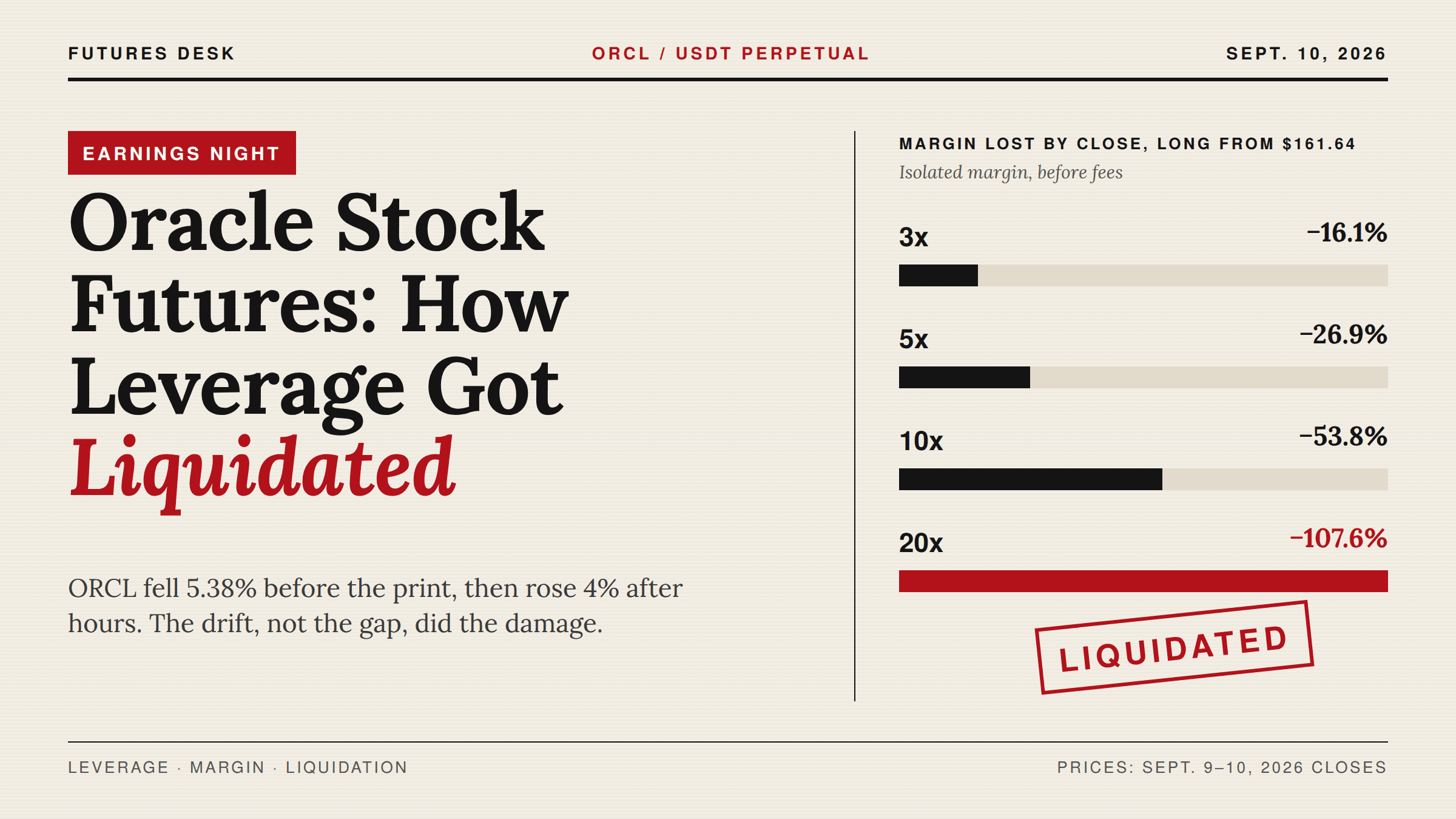
Oracle Stock Futures After Earnings: How Leverage Got Liquidated

MU Stock Reclaims $1,000 Again: What's Actually Different This Time

XST Coin Price Fell Over 40% for Two Straight Days: What That Pattern Actually Means
Is The US Becoming The Crypto Capital? Brad Garlinghouse's Bold Predictions Explained
GPT-6 Astra and Crypto: The AI Token Bid and the Cyber Risk

Nike Is Being Removed From the S&P 100: What a 12 Year Low Actually Means for the Stock
Lululemon Stock Crashes to an 8 Year Low Right Before Its New CEO Even Starts

PONS Robinhood Chain Token: What the Buyback Rally Rests On

Dell Stock Surges 9.4% After Smashing Earnings Estimates: What Drove the AI Server Beat

SQQQ Explained: Why the 3x Inverse Nasdaq ETF Bleeds Value

How Safe Are the Crypto Exchanges Pakistani Traders Actually Use? A Security Comparison
XST Coin Price Crosses Into Deep Capitulation Territory: What a 90%+ Decline Actually Signals
Crypto Futures Liquidation in Pakistan: How It Works and How to Manage Risk
XPL/USDT After the August 25 Unlock: Will Ecosystem Incentives Create Demand or Selling Pressure?
SPCX Stock Keeps Swinging Around Its $135 IPO Price : What the Lockup Schedule Still Ahead Actually Means
Best Futures Exchange in Pakistan for 2026? What Leverage, Liquidity, and Liquidation Risk Actually Require
Crypto P2P Trading in Pakistan: Which Exchange Has the Best PKR Marketplace in 2026
Best Crypto Exchange in Pakistan for 2026: What You Need to Know Before Choosing
How to Earn WXT Rewards with WEEX Trade to Earn S6 Event
Adobe Stock Jumps After BlackRock Raises Stake to Over 10%: What an $8.4 Billion Bet Actually Signals
Before Swapping XSolut (XST): How to Check Liquidity, Price Impact, and Failed-Trade Risk 2026
MU Stock and the Apple CXMT Test: What Replacing Micron With Chinese Memory Actually Means
What Is Blockchain Technology? Follow One Transaction to See
What Is Pi Network? A Complete Beginner's Guide
NEAR Price Jumps 80% in a Week: What Confidential Intents Changed
PENGU Airdrop on WEEX: Get 10 USDT in PENGU Before October 6
Why Did the CLARITY Act Fail in the Senate, and What Happens Next for Crypto Regulation?
Airdrops This Week (September 17-23, 2026): Official Conditions and Safety Checks


