
Crypto: Aave V4 Surpasses One Billion Dollars, Driven by Multisig

 Prefer us on Google


At the end of March, Aave launched its V4, a new version of its lending protocol with a simple approach: start small and then expand gradually. Six months later, adoption seems to be strong. Indeed, the V4 of the protocol has reached one billion dollars in deposits.
On a protocol like Aave, you don’t deposit any amount of any asset. Each market has a cap, and beyond that, deposits are refused. These caps start low on purpose, and raising them allows for growth. Indeed, Aave V4 introduces a new approach to managing the maximum capacities of its pools.
Key Points
- V4 has been live since March 30, 2026. According to various metrics, it hovers around one billion dollars in deposits; the exact figure varies from source to source.
- This increase followed a series of cap raises, not a spontaneous rush.
- Most of these raises were not voted on individually by AAVE holders.
- They were executed by a small group controlling a multisig vault, following a public risk recommendation.
- A typical vote takes about two weeks. This committee can act in a matter of hours.
Around One Billion, Depending on How You Count
Announced in 2024 by Stani Kulechov and then postponed, Aave V4 was deployed on Ethereum on March 30, 2026. Its architecture is called Hub and Spoke. It consists of a central liquidity reserve (the hub) that feeds into distinct borrowing markets (the spokes), each with its own collateral rules. The idea is to pool funds instead of letting them sit in as many silos as there are markets. An approach focused on capital efficiency.
By mid-September, several counts had pushed V4 above one billion dollars in deposited assets. These calculations were presented by Sumcap.xyz, which has closely monitored the evolution of V4 since its deployment. V3, on the other hand, still exceeds 30 billion supplied.
This growth has a well-identified driver. On V4, the old << supply caps >> and << borrow caps >> become roughly add caps (what a spoke is allowed to deposit in the hub) and draw caps (what it is allowed to borrow). A saturated cap refuses new deposits. It also limits Aave's exposure to an asset. Thus, if its price drops or its liquidity evaporates, the volume of potential bad debts remains limited.
Not a Vote for Every Increase
Until V4, cap raises, which concretely allowed the protocol to accept more of an asset, were decided via a governance vote. Now, it’s LlamaRisk, a risk provider mandated by the DAO, that publishes the << rounds >> of raises on the forum. The changes themselves are now applied via the Security Council, a multisig, which executes a transaction only if multiple keys sign. AAVE holders did not vote << yes >> or << no >> for each increase from 10,000 to 15,000 ETH. They vote on heavy actions: launching V4, listing a market, deploying a chain, granting a mandate. On a daily basis, the caps are the responsibility of LlamaRisk and the Security Council.
Thus, the majority of the increases that made this growth possible were signed by a multisig rather than adopted by an on-chain vote. In other words, it was not the assembly of tokenholders that opened the floodgates one by one.
The Risk Stewards
The regime that the DAO voted on as early as V3 is called the Risk Stewards. It allows a risk committee to adjust certain parameters without convening all AAVE holders. The scope is locked by code: maximum range per update, delay before touching the same asset again, prohibition on listing a new asset or moving outside the bounds. This is the model << the DAO sets the corridor, the committee drives within it >>.
On V4, it is not yet the tool that has made the most progress. An ARFC from August 2026, followed by a Snapshot and an AIP (proposal 523), aims to connect the Stewards to Ethereum and Avalanche. By the end of September, LlamaRisk indicated that the adjustments for Ethereum and Avalanche were still going through the Security Council, except for Arc, which had already been addressed via the Stewards.
The recommendations today mainly come from LlamaRisk, along with Aave Labs. Chaos Labs exited the framework in the spring of 2026.
The gain is primarily temporal. Forum, Snapshot of about five days, on-chain voting, execution delay, the entire procedure previously took about two weeks. The Council or Steward brings this down to a few hours.
-- Price
The Tension Remains the Same, the Contract is Not the Same
A handful of keys that arbitrate the exposure of a market aiming for a billion does not align well with the image of a protocol governed in a decentralized manner. Historically, the Aave Chan Initiative, long one of the main delegates, founded by Marc Zeller, defended this division of labor. ACI announced in March 2026 that it would not renew and has stepped back. The argument, however, did not leave with the team. Proponents of systematic voting argue that a mandate that is too broad ultimately empties the ballot box of its substance.
Delegation also has a security cost. A multisig involves private keys. A Steward constrained by the code limits the damage; even if compromised, it cannot list a phantom asset or multiply a ceiling by ten in one move. The Security Council from the launch phase has a broader mandate because V4 opened its doors empty and needed to be able to open quickly. It is a different risk profile, even if each increase remains a public transaction, preceded by a dated recommendation on the forum.
In a bank, this kind of committee operates behind closed doors. At Aave, one can review the transaction. AAVE holders can revoke a mandate through a vote. Since V3, they have rather expanded it. In V4, they are only just beginning to transpose it into the contract designed for that.
The slider between speed and control has therefore not disappeared. It has changed shape; six months of V4 have been written with a launch Council. The future will depend on what the DAO really leaves to the Stewards once their roles are firmly connected. In parallel, the protocol has removed several blockchains and assets deemed phantom from its offering.
This content is provided for general informational purposes only and doesn't constitute financial, investment, legal, or tax advice. Any events, rewards, online promotions, or related information mentioned herein should not be considered a recommendation, solicitation, or invitation to purchase, sell, trade, or otherwise deal in any crypto assets. Crypto assets are highly volatile and may result in loss. The availability of WEEX services, products, and related events may vary by region. You are responsible for ensuring that your participation is in accordance with applicable local laws and regulations.
You may also like
Bitcoin: Strategy Acquires Another 334 BTC, Raising Its Reserve to 848,000

SNDK Stock Fell 3.8% After a 650% Rally: Does a Single-Digit P/E Make Sandisk Cheap or Just Cyclical?
Oil Futures Hold Above $100 After Houthis Claim Aramco Attacks: What Is Confirmed and What Is Not

MSTR Stock Slips After Strategy Buys Just 334 Bitcoin: Why It Spent More on Preferred Shares Than on BTC

INTC Stock Drops After TSMC Terafab Talks: Is Intel's Biggest Outside Endorsement at Risk?

Who Will Aave Hand Its Brand Over To? The DAO Asset Ownership Dispute Behind the Foundation Proposal
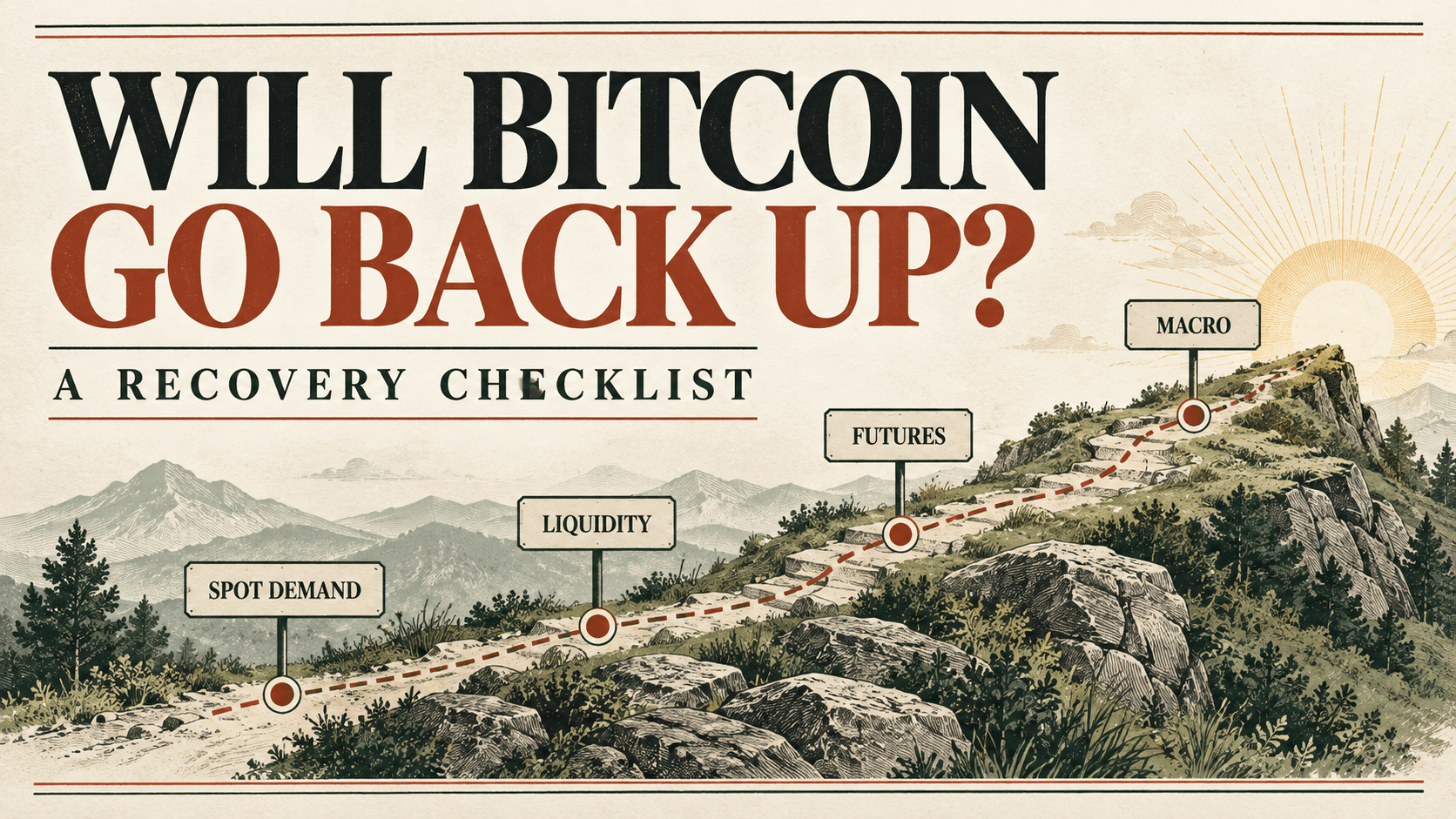
Will Bitcoin (BTC) Go Back Up in 2026? How to Tell a Real Recovery From a Short-Covering Bounce
Will Bitcoin go back up in 2026? Learn how spot demand, ETF flows, crypto liquidity, futures positioning and macro conditions shape a real BTC recovery.
Hyperliquid's Perpetual Futures Listed on Bloomberg Terminal, Increasing Institutional Investor Interest
NSE Stock Price Hits a New Low After IPO: Can National Stock Exchange Shares Recover?
National Stock Exchange of India shares traded near ₹1,741 on October 5, close to a post-listing low of about ₹1,735 and roughly 2.5% below the ₹1,785 IPO price. The stock has now spent more than a week under its issue price, and a recovery depends on retail demand, derivatives volumes and the broader Indian market.

Trump Creates Super Intelligence Force: What Changes in the AI Race
Home-jacking crypto: they threaten to kill a pregnant woman's baby in England

Bitcoin Exchange Withdrawal Rate Declines, Signaling Long-Term Holding

Bitcoin Miners Sign Their Best Month Since January
NFT: Porsche abandons its Web3 project around the 911
Former The Arena Advisor Accuses ROVE of Salary and Token Quota Arrears

Movement of Old Ethereum and Limited Exchange Reserves
Plunging GPU prices threaten AI hosts, and new hedges step in
Kalshi Hits the Brakes as Regulators Target User Incentives in Prediction Markets
Global Dollar: Is the Fed's Hegemony Breaking?
Economy: Christine Lagarde Calls for Regulation of AI Agents Already Paying in Stablecoins
XST Coin Surges Again: Can XSolut Price Recover to $0.01?
XST coin climbed toward $0.002038 on October 2, 2026, up roughly 77% over seven days. Reaching $0.01 would require a gain of about 391% from that level, and a separate September analysis flagging contract tracking concerns is worth understanding before treating any XST price chart as reliable.
Why Would a Public Blockchain Stop? Understanding Blockchain Consensus from Cosmos's 25-Hour Downtime

Fed’s Jefferson signals patience as October rate hike odds fall to 23%

New York and Wyoming Sign Agreement to Coordinate Cryptocurrency Company Regulation
The Quantum Issue: Quantum Isn't Coming For Your Bitcoin

PA Daily | Fed's Kashkari Expects One More Rate Hike This Year; OpenAI Plans to Raise $30 Billion, Valuation Reaches $1.4 Trillion

Why Did Google Stock Reverse After Gemini 4 Argon: What's Actually Going On
PTT Stock: A Pipeline Shutdown Hit the Same Day Profit Jumped 23%
OpenAI and Anthropic Targeted by the FTC: Investigation Launched into AI Safety
Bitcoin Cash: The History of Its Emergence, BCH Technology, Risks and Opportunities for Investors
Bitcoin: Strategy Acquires Another 334 BTC, Raising Its Reserve to 848,000
SNDK Stock Fell 3.8% After a 650% Rally: Does a Single-Digit P/E Make Sandisk Cheap or Just Cyclical?
Oil Futures Hold Above $100 After Houthis Claim Aramco Attacks: What Is Confirmed and What Is Not
MSTR Stock Slips After Strategy Buys Just 334 Bitcoin: Why It Spent More on Preferred Shares Than on BTC
INTC Stock Drops After TSMC Terafab Talks: Is Intel's Biggest Outside Endorsement at Risk?
Who Will Aave Hand Its Brand Over To? The DAO Asset Ownership Dispute Behind the Foundation Proposal
Contents
Latest articles



Latest coin listings on WEEX


