
More than $34.6 million moved before Tether blockade

 Prefer us on Google


Of 846 selected crypto wallets linked to Iran and regional groups by U.S. or Israeli authorities, 84% traded exclusively or almost exclusively in USDT. Tether claims to have frozen nearly $550 million in Iran-related tokens in 2026, but Senate researchers assert that delays allowed tens of millions of dollars to flow through. The question is whether those delays are isolated incidents.
84% of a selected group of 846 wallets
The preliminary report from Democratic minority staff of the U.S. Senate Permanent Subcommittee on Investigations was released on September 28. The researchers examined 846 wallets that had been sanctioned or marked for seizure by U.S. or Israeli authorities due to ties to Iran or regional groups. The evidence reviewed spans more than five years, up to August 2026.
The 84% figure is not a statement about all Iranian crypto wallets or the share of all USDT transactions that are illegal. The report used 'primarily' for a digital currency when it represented more than 80% of the total transaction value of a wallet. The figures also do not indicate what portion of Iranian sanction evasion occurs via crypto.
USDT can move across different blockchains, but Tether can blacklist addresses as the issuer and prevent tokens from being moved from those addresses. Thus, the discussion revolves not only around the use of the stablecoin but also how quickly addresses are blocked. The rules surrounding USDT and access for European trading platforms are also under scrutiny; the regulation of USDT on European exchanges forms a broader context for this discussion.
Tether cites freezes, researchers point to delays
Tether reported that actions related to USDT froze approximately $550 million in wallets linked by U.S. authorities to the Iranian central bank and Iranian sanction networks in 2026. The company stated that it helped block more than $344 million on two addresses following information from OFAC and other U.S. law enforcement agencies. In July, Tether reported a freeze of over $130 million on four wallets after the Treasury Department added new blockchain addresses to the sanctions list.
These two announced actions together amount to at least $474 million. Tether did not provide a breakdown by wallet that would allow the total amount of approximately $550 million to be fully verified.
Senate staff also examined 39 wallets that the Israeli NBCTF linked in June 2023 to Tawfiq Muhammad Sa'id al-Law, who was later sanctioned by the U.S. Treasury for providing financial services to Hezbollah. Five addresses had already been blocked; the remaining 34 were reportedly frozen only in March 2024. In the interim, according to the researchers' calculations, more than $34.6 million in USDT moved from those wallets.
That amount pertains to this specific group of addresses, not all Iranian wallets. The findings also do not constitute a judicial determination that Tether violated U.S. law. The issue touches on broader questions regarding investigations into Iran-related transactions and sanction compliance among crypto companies, but the cases are not the same.
Blumenthal calls for compliance investigation
Senator Richard Blumenthal, the Democratic vice chair of the subcommittee, has forwarded the findings to the Treasury Department and the Justice Department. He is asking the agencies to investigate whether the delays indicate shortcomings in Tether's anti-money laundering and sanction policies. That referral does not prove that Tether violated the law and does not mean that either department has opened a new investigation.
The report states that Tether received a request from the subcommittee on June 4 for information and documents but had not responded by the time of publication. The company's public statement on September 28 did not directly address the analysis of the 846 wallets or the example of the $34.6 million.
Tether CEO Paolo Ardoino stated that the company acts when authorities provide credible information. He also pointed out that public blockchains give researchers visibility into money flows. A previous audit of Tether's financial position addresses a different question: it does not speak to the timing of individual sanction freezes.
The two series of events also occur in different timeframes. The wallet example from the researchers pertains to a report from 2023 and freezes in 2024; the actions highlighted by Tether took place in 2026. Together, they show that issuers can block large amounts after addresses have been identified, while a delay before blocking may allow for further transactions.
Separately, a U.S. forfeiture case is attempting to seize approximately $61 million in crypto allegedly linked to illegal Iranian oil trade. Prosecutors claim that the broader network moved more than $1.5 billion in proceeds and was involved in sanction evasion and money laundering. That case is separate from the Senate investigation and does not constitute evidence of wrongdoing by Tether. The outstanding question for the departments is whether the delays described by Senate staff were isolated gaps or indicative of broader shortcomings.
-- Price
This content is provided for general informational purposes only and doesn't constitute financial, investment, legal, or tax advice. Any events, rewards, online promotions, or related information mentioned herein should not be considered a recommendation, solicitation, or invitation to purchase, sell, trade, or otherwise deal in any crypto assets. Crypto assets are highly volatile and may result in loss. The availability of WEEX services, products, and related events may vary by region. You are responsible for ensuring that your participation is in accordance with applicable local laws and regulations.
You may also like

INTC Stock Drops After TSMC Terafab Talks: Is Intel's Biggest Outside Endorsement at Risk?

Bitcoin Holds at $86,000 as Dollar Reaches Highest Level in 18 Months

a16z Unveils the Truth Behind AI Boom: The Top 1% Support the Entire AI Narrative
Will Bitcoin (BTC) Go Back Up in 2026? How to Tell a Real Recovery From a Short-Covering Bounce
Will Bitcoin go back up in 2026? Learn how spot demand, ETF flows, crypto liquidity, futures positioning and macro conditions shape a real BTC recovery.
Can You Live Only on Stablecoins? Industry Experts Respond with Yes or No
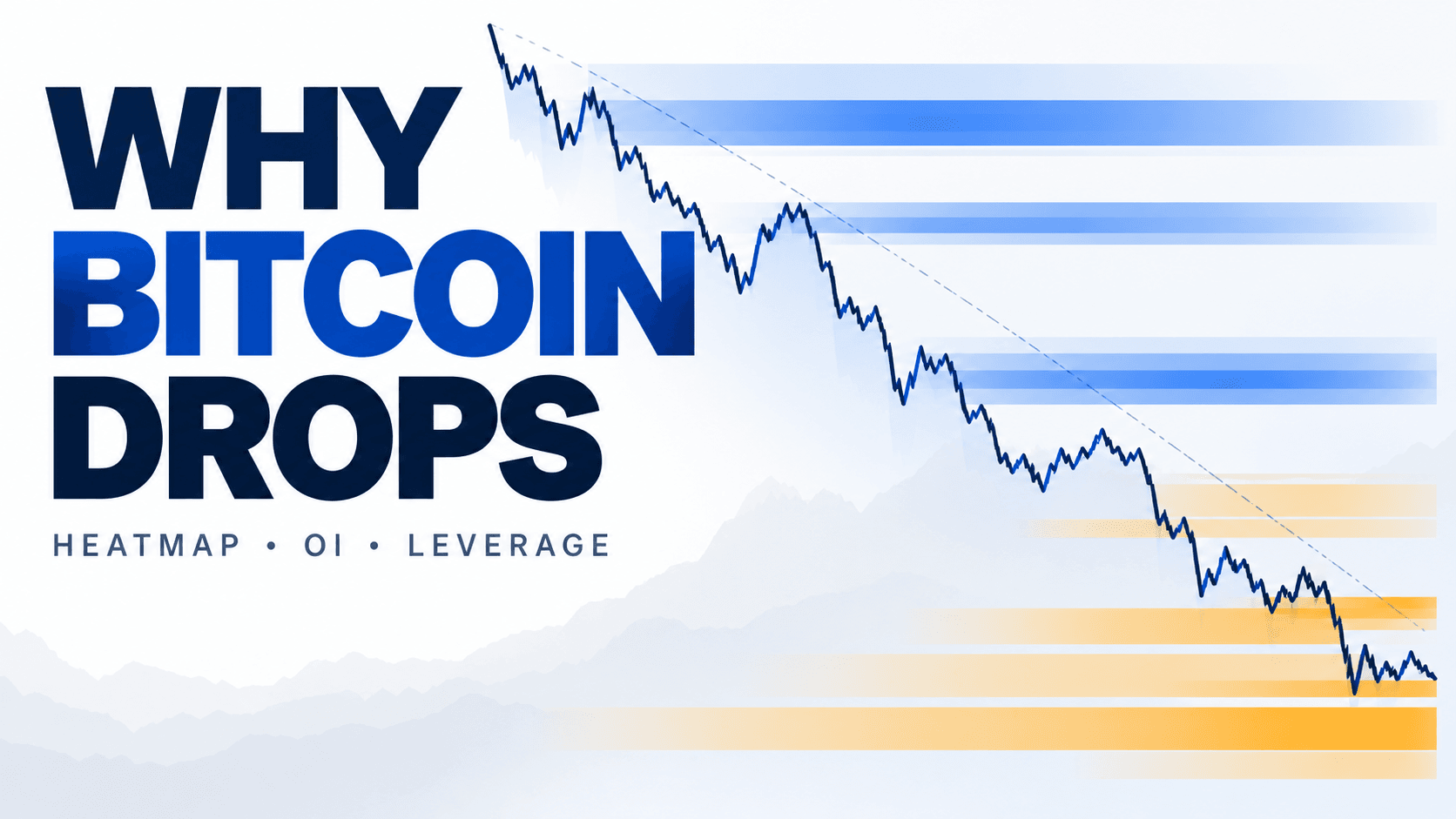
Why Is Bitcoin (BTC) Dropping? How to Read a BTC Liquidation Heatmap Without Guessing the Bottom
Why does Bitcoin drop? Learn how a BTC liquidation heatmap, crypto OI, funding, leverage and market depth can explain sell-offs and false bottoms.
Examining Hong Kong's RWA Tokenization from Issuance to Overseas Distribution
French Financial Instability Causes Euro to Hit 17-Month Low... Asian Markets Rise 2% on Diminished U.S. Rate Hike Expectations
"A National Strategy Can Be Formulated in Six Months" - Policy Calendar Discussed by Masaki Hirakawa

Bitcoin Trading Volume Increases, Demand Needed for New Peak

FOMC Minutes,and TOKEN2049 Set the Tone | WEEX Weekly Market Hotspot Preview (October 5-October 9, 2026)
WEEX Weekly Market Hotspot Preview focuses on ISM Services PMI, Glamsterdam Sepolia activation, FOMC minutes, Applied Digital earnings, TOKEN2049, PepsiCo and Delta earnings, and preliminary Michigan consumer sentiment. The week’s core narrative centers on rate-path repricing, AI data-center demand validation, institutional crypto narratives, and consumer-resilience signals.
WEEX Exclusive:FOMC Minutes,and TOKEN2049 Set the Tone | WEEX Weekly Market Hotspot Preview (October 5-October 9, 2026)

Survey of 2,423 Coin Investors: "What Do You Think About Taxation?"

Ethereum’s past outflow charts can change when more exchange wallets are identified

Trump Creates Super Intelligence Force: What Changes in the AI Race

Bank of America Warns: Is the U.S. Stock Market Repeating the 2000 Dot-Com Bubble?
36.9 Million Fake ZANO and 1.8 Trillion fUSD Stablecoins Flood On-Chain! Zano Team Decides to Roll Back Blockchain by About One Month Due to Inability to Distinguish Fake Coins
Davie Strengthening Capital Flow, Net Inflow in Spot Contracts
How are real-world assets tokenized in Hong Kong?

Value of Assets Locked in Stellar Network Reaches $273 Million

AI is Causing the Collapse of U.S. Treasuries, and Even if Successful, It Will Face Heavy Taxes

Visa Stablecoin-Linked Card Payments Surge Nearly 200% Year-on-Year
Nasdaq to Launch XRP-Focused Evernorth Shares on October 8

Vitalik's New Sci-Fi Novel Puts Web3 to the Test

What Would Happen to Bitcoin if the AI Bubble Bursts?

Bitcoin's 4-Year Cycle: What 2026 Reveals About the Next Massive Buy
Three Major Transformation Directions in the Post-Fintech Era

US Opens New Path for Investment Funds to Enter Crypto, Bitcoin May Attract More Institutional Interest - Fintech World
LONG Launches Community Vault LP Upgrade Feature, Supporting Stock Token Liquidity Provisioning
Hyperliquid to Receive $14.5 Million AQAv2 Reserve Yield Distribution Tomorrow
INTC Stock Drops After TSMC Terafab Talks: Is Intel's Biggest Outside Endorsement at Risk?
Bitcoin Holds at $86,000 as Dollar Reaches Highest Level in 18 Months
a16z Unveils the Truth Behind AI Boom: The Top 1% Support the Entire AI Narrative
Will Bitcoin (BTC) Go Back Up in 2026? How to Tell a Real Recovery From a Short-Covering Bounce
Will Bitcoin go back up in 2026? Learn how spot demand, ETF flows, crypto liquidity, futures positioning and macro conditions shape a real BTC recovery.
Can You Live Only on Stablecoins? Industry Experts Respond with Yes or No
Why Is Bitcoin (BTC) Dropping? How to Read a BTC Liquidation Heatmap Without Guessing the Bottom
Why does Bitcoin drop? Learn how a BTC liquidation heatmap, crypto OI, funding, leverage and market depth can explain sell-offs and false bottoms.
Contents
Latest articles


Latest coin listings on WEEX


