
The Need for an Execution Harness in Agentic Finance

 Prefer us on Google


"Move this asset to another chain, pay the data usage fee there, and then bring back the receipt."
For a person, it's a one-sentence request. However, for an AI agent to complete this task, it must choose a bridge, compare quotes, create an approval transaction, calculate the gas for the destination chain, recover a halted transfer, prevent the same money from being spent twice, and verify that the initial request has actually been fulfilled.
Discussions about an era where AI spends money often start with the notion that "you just need to give the agent a wallet." This is not incorrect if it’s a simple payment. The agent paying the API fee with x402 involves checking prices, approvals, transfers, and receipts. However, the above request is not merely a payment; it is an agentic finance workflow, where payment is just one step within it. This distinction is important. Describing all value transfers through complex financial systems makes even ordinary payments seem difficult, and calling every financial workflow a payment obscures more complex execution issues. This article separates the two.
1. The Boundary Between Payments and Finance
Agentic payments also involve judgment. The agent decides what to buy, which provider to use, and how much to spend within limits. Still, the payment itself is a limited task of checking conditions, approvals, value transfers, and returning evidence. When a service like x402 sends payment conditions, the agent signs to complete the payment and sends the request back with evidence, a flow that can be sufficiently handled by wallets or payment middleware.
Agentic finance begins when the agent is responsible for financial judgments and their outcomes. It involves coordinating multiple actions amidst changing states, such as swap and bridge path selection, approval limit management, treasury rebalancing, lending, and hedging. At this point, the system must preserve intent across multiple stages and prove that the final state aligns with the initial goal. Commerce overlaps with finance as a separate category, where payment is just one step in that flow. The distinction is simple: payments move value, while finance determines how to allocate, protect, and manage capital.
2. The 7-Layer Stack of Agentic Finance
[Figure 2] 7-Layer Stack of Agentic Finance --- Roles by Layer and Representative Players (Source=Aomi Labs Research)
No single model, wallet, protocol, or chain can represent the entirety of agentic finance alone. The process from goal to settlement is divided into seven layers.
Layer 1 is the agent service that receives user goals and consent (ChatGPT, Gemini, Amazon Loppers, PayPal); Layer 2 is the runtime that manages workflows, memory, retries, and states; Layer 3 is domain execution that turns plans into actual orders or transactions (1inch, DeBridge, Uniswap, Kraken). Layer 4 wallets and permissions define who can act on behalf of whom and decide whether to sign. Coinbase, MetaMask, OKX, Privacy, Turnkey, Safe, and Fireblock compete, while Google AP2 and Visa/Mastercard set standards. Only Layer 5 directly handles payments. x402, MPP, ACP, and UCP exchange prices, payment methods, and evidence. Layer 6 involves stablecoins and treasury (Circle, Tether, Stripe, Bridge), while Layer 7 consists of settlement rails (Base, Solana, Ethereum Layer 2, card networks, banking networks). Security, compliance, simulation, and reconciliation span all seven layers.
This map places responsibility rather than companies. A single company may span multiple layers, but the tasks assigned to each layer differ. Payment protocols coordinate payment procedures, while wallets approve or deny requests. However, neither is responsible for determining whether a multi-stage financial goal has been successfully completed.
3. The Boundary of Approval
The early stages of financial workflows can be flexible. They interpret goals, choose paths, and create proposals. However, from the moment a request touches the authority to spend money, it must be decisive. Signers must evaluate unchanged requests against identity, consent, limits, and policies, and the settlement rail processes them as is without reinterpreting intent. The IMF's 2026 agentic payment model separates "intent and coordination," "control and approval," and "settlement" for the same reason. The model can propose freely, while wallets can independently reject. The runtime prepares evidence but must not take over authority.
4. The Current Position of the Market
In a narrow sense, payments are rapidly becoming products. Wallets are transitioning from key storage to programmable permission systems. Coinbase isolates keys in a secure area to set limits, while MetaMask mandates simulations before signing while maintaining self-custody. Circle and CrossMint bundle wallets, funds, and payment protocols simultaneously. Protocols do not converge into one but coexist by dividing roles. x402 and MPP handle machine payments, while ACP and UCP manage commerce flows, and AP2 and card protocols deal with delegation of authority and identity.
According to Chainalysis, by Q1 2026, transactions on Base's x402 will exceed 100 million, and Solana has reported over 35 million. However, some of these were speculative activities. This indicates that technology has spread, but it does not prove that complex autonomous financial demand has taken root. Utilization is digital, prices are machine-readable, and it starts with API and data call payments that can fail and be reverted. DeFi trading and cross-chain routing carry high execution risks, and treasury and cross-border operations add regulatory and liability issues. Stablecoins are important settlement tools, but they do not resolve agent identity, refunds, taxes, or transaction composition.
5. The Role of the Execution Harness
[Figure 3] The 7 Stages of the Execution Lifecycle and the Boundary of Approval --- Areas Managed by the Harness and Wallet (Source=Aomi Labs Research)
Not every payment requires an execution harness. It becomes necessary when multiple actions depend on each other, when a path must be chosen, when states are continuously changing, when there are partial failures and irreversible executions, or when results cannot be proven with receipts alone.
Let’s return to the initial request in the first sentence. The wallet sets spending limits, the simulator runs a transaction in advance, and the chain proves finality. However, proving that the original goal is connected from path selection to final balance is not the responsibility of any of the three. Currently, this gap is filled by the model's inference. The agent rereads the document, re-evaluates approval rules each time, and retries if it fails. Each time, it spends tokens and time, risking changes in quotes or the same money being spent twice.
The execution harness takes on this role as a runtime. It interprets goals, selects tools and paths within controlled ranges, creates accurate transactions, simulates before authority requests, submits reviewed requests only once, and compares the final state with the initial intent. Unlike toolkits, it is responsible for state, recovery, and completion, and unlike wallets, it does not take signing authority. The right to refuse remains with the wallet until the end. Therefore, the output of the harness is not just a successful transaction but a chain of evidence linking intent, approval, receipts, and final state.
6. The Need for a Harness Even with Better Models
If models become smarter, will this layer become unnecessary? However, the order of approvals, rules for preventing duplicate executions, receipt formats, and methods for verifying balances do not change with each execution. Such elements should be embedded in validated software, while the model's inference should be used where real judgment is needed. Legal and medical AIs have already taken this path. Harvey wraps general models with workflows, citation requirements, and human reviews, while Avery binds medical record drafts to original information. Repetitive professional tasks have transitioned from prompts to software. In finance, where results involve irreversible asset movements, software must directly handle simulation, duplication prevention, recovery, and reconciliation.
This argument must be validated through measurement. Compare the presence and absence of a harness under the same model, task, signing policy, and market conditions, measuring tokens, time, costs, and human intervention per validated outcome. Examine success rates, rates of blocking risky proposals, consistency between simulations and actual executions, and accuracy of final states. Advantages must be maintained even under unfavorable conditions like outdated quotes or halted bridges. A harness that hides failures or merely increases retries has not proven its value.
7. Looking Ahead 2-3 Years
Within a year, spending policies and transaction security for agents will become basic functions of wallets, and processors will support both x402 and MPP. This marks the advancement of agentic payments. Greater opportunities will open above that. Agents will carry delegated authority between services, routers will choose appropriate means among stablecoins, cards, and banks, and treasury and compliance will need to connect all actions with precise agents, tasks, and outcomes. The systems that survive will separate proposals, executions, approvals, and settlements, linking all four as evidence. At that point, agentic payments will become an embedded feature, and agentic finance will become the broader operating system in which these payments occur.
Agentic payments create pathways for agents to spend money. Agentic finance allows for financial judgments and executions within delegated authority. Better models yield better judgments. The harness ensures that these judgments end in verifiable results without seizing the wallet's authority.
What is Aomi Labs?
Aomi Labs develops infrastructure that transforms the intents of AI agents into verified on-chain executions encompassing both payment and non-payment actions. It focuses on runtime (Layer 2) and domain execution (Layer 3) among the seven layers, connecting rather than replacing wallets, payment protocols, and settlement rails. The comparison of "with and without harness" is still a method of validation, not a measured result.
This KBW will feature meetings with Korean builders at the TRUST404 hackathon (September 29), EASYCON (October 1), and Dev Korea mixer (October 2).
Original: Aomi Labs Research, "The State of Execution Harnesses for Agentic Payments" (2026. 8. 13.) --- aomi.dev/research. Major materials cited in the original include the IMF's 2026 agentic payment model, x402 and MPP standards, and Chainalysis market analysis. The functions of companies follow the product descriptions published by each company, except in cases where independently verified.
Image source: Aomi Labs Research (Korean version remade)
-- Price
This content is provided for general informational purposes only and doesn't constitute financial, investment, legal, or tax advice. Any events, rewards, online promotions, or related information mentioned herein should not be considered a recommendation, solicitation, or invitation to purchase, sell, trade, or otherwise deal in any crypto assets. Crypto assets are highly volatile and may result in loss. The availability of WEEX services, products, and related events may vary by region. You are responsible for ensuring that your participation is in accordance with applicable local laws and regulations.
You may also like

Elon Musk Net Worth Trillion Dollars: Will He Be a Trillionaire Again?
What Does a Rising VIX Mean for the Stock Market? A 2026 Investor Guide

Why Is VIX Rising Today? What VIX Means for Stocks and Bitcoin

The Real Estate Market Is Dead In Spain. Long Live Bitcoin.

Why Hyperliquid's Prediction Market HIP-4 Can't Keep Up with Polymarket?
Why Is iExec RLC (RLC) Crypto Rising Today? Privacy Demand, Multichain Migration, and the Volume Test
Why is iExec RLC rising today? Examine RLC volume, confidential-computing utility, token supply, bridge migration, and the adoption evidence to watch.

How to Join WEEX Alpha Suite at TOKEN2049 Singapore 2026: Dates, Location and Registration
Find out how to join WEEX Alpha Suite at TOKEN2049 Singapore 2026, including the event dates, location, registration details, and who can attend.

Bitcoin Fear and Greed Index: How It Works
Samsung Electronics Files Patent for Smart Contract Cryptocurrency Wallet

Bitcoin: Strategy Acquires Another 334 BTC, Raising Its Reserve to 848,000

SNDK Stock Fell 3.8% After a 650% Rally: Does a Single-Digit P/E Make Sandisk Cheap or Just Cyclical?

Oil Futures Hold Above $100 After Houthis Claim Aramco Attacks: What Is Confirmed and What Is Not

MSTR Stock Slips After Strategy Buys Just 334 Bitcoin: Why It Spent More on Preferred Shares Than on BTC

INTC Stock Drops After TSMC Terafab Talks: Is Intel's Biggest Outside Endorsement at Risk?

Who Will Aave Hand Its Brand Over To? The DAO Asset Ownership Dispute Behind the Foundation Proposal
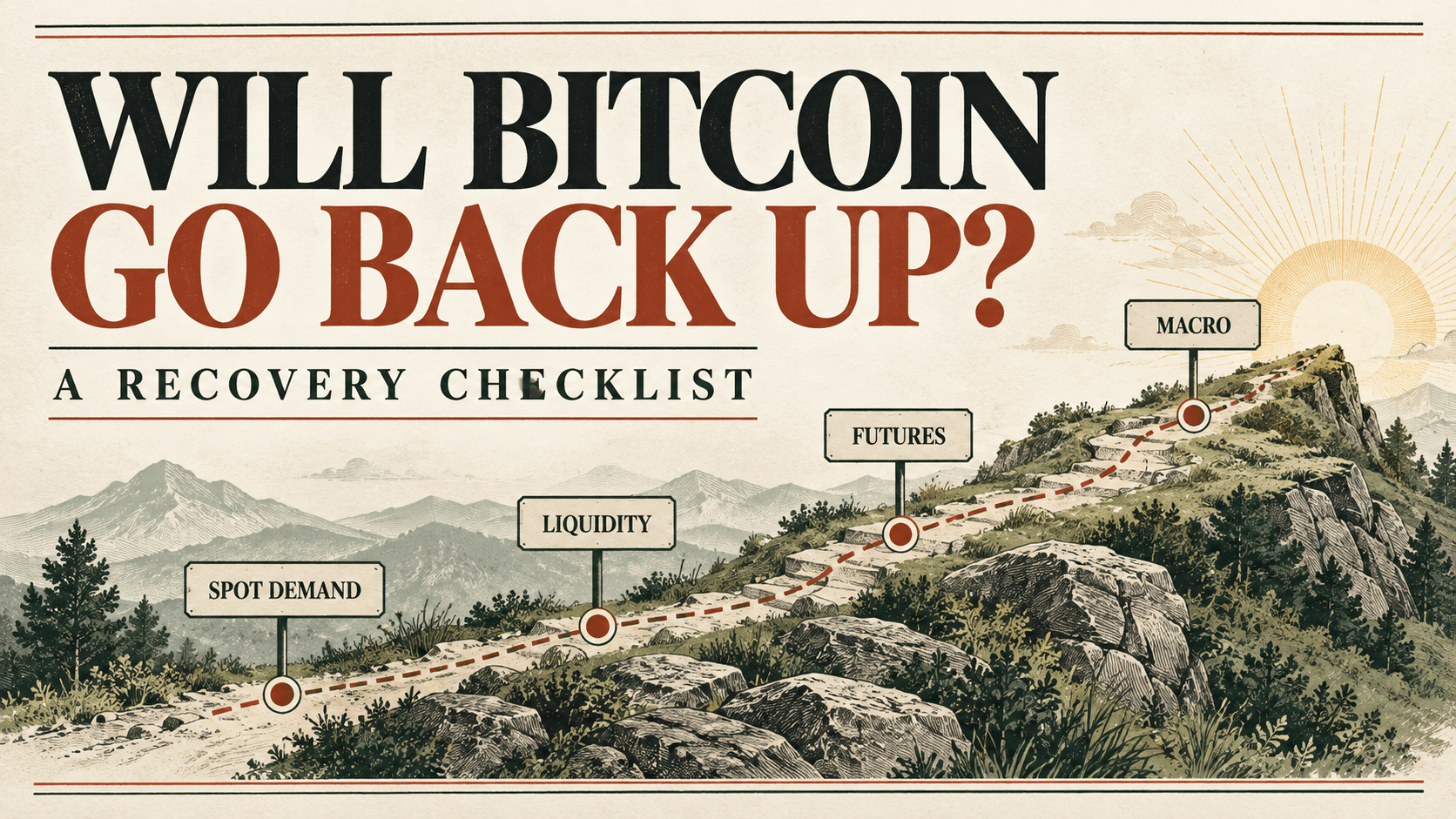
Will Bitcoin (BTC) Go Back Up in 2026? How to Tell a Real Recovery From a Short-Covering Bounce
Will Bitcoin go back up in 2026? Learn how spot demand, ETF flows, crypto liquidity, futures positioning and macro conditions shape a real BTC recovery.

Hyperliquid's Perpetual Futures Listed on Bloomberg Terminal, Increasing Institutional Investor Interest
NSE Stock Price Hits a New Low After IPO: Can National Stock Exchange Shares Recover?
National Stock Exchange of India shares traded near ₹1,741 on October 5, close to a post-listing low of about ₹1,735 and roughly 2.5% below the ₹1,785 IPO price. The stock has now spent more than a week under its issue price, and a recovery depends on retail demand, derivatives volumes and the broader Indian market.

Trump Creates Super Intelligence Force: What Changes in the AI Race
Home-jacking crypto: they threaten to kill a pregnant woman's baby in England

Bitcoin Exchange Withdrawal Rate Declines, Signaling Long-Term Holding

Bitcoin Miners Sign Their Best Month Since January

NFT: Porsche abandons its Web3 project around the 911
Former The Arena Advisor Accuses ROVE of Salary and Token Quota Arrears

Movement of Old Ethereum and Limited Exchange Reserves
Plunging GPU prices threaten AI hosts, and new hedges step in

Kalshi Hits the Brakes as Regulators Target User Incentives in Prediction Markets
Global Dollar: Is the Fed's Hegemony Breaking?
Economy: Christine Lagarde Calls for Regulation of AI Agents Already Paying in Stablecoins
XST Coin Surges Again: Can XSolut Price Recover to $0.01?
XST coin climbed toward $0.002038 on October 2, 2026, up roughly 77% over seven days. Reaching $0.01 would require a gain of about 391% from that level, and a separate September analysis flagging contract tracking concerns is worth understanding before treating any XST price chart as reliable.
Elon Musk Net Worth Trillion Dollars: Will He Be a Trillionaire Again?
What Does a Rising VIX Mean for the Stock Market? A 2026 Investor Guide
Why Is VIX Rising Today? What VIX Means for Stocks and Bitcoin
The Real Estate Market Is Dead In Spain. Long Live Bitcoin.
Why Hyperliquid's Prediction Market HIP-4 Can't Keep Up with Polymarket?
Why Is iExec RLC (RLC) Crypto Rising Today? Privacy Demand, Multichain Migration, and the Volume Test
Why is iExec RLC rising today? Examine RLC volume, confidential-computing utility, token supply, bridge migration, and the adoption evidence to watch.


