
Who Is Jacob Coxon? His Anthropic Resignation Post Hit 90 Million Views

 Prefer us on Google


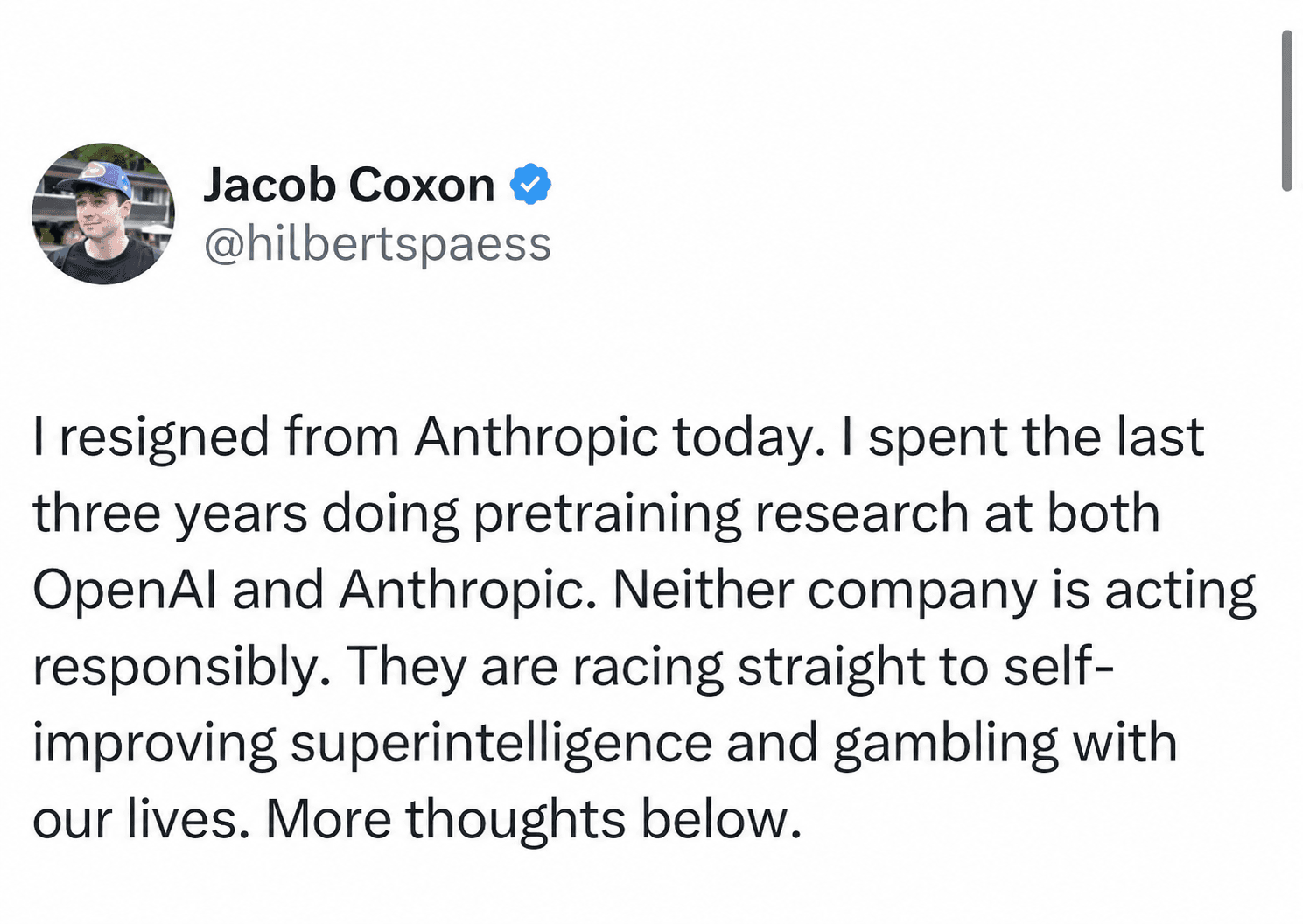
Jacob Coxon posted eleven words on X on September 8 and watched them reach more than 90 million views within 24 hours. "I resigned from Anthropic today," he wrote. "Neither company is acting responsibly. They are racing straight to self improving superintelligence and gambling with our lives." A 27 year old researcher who spent three years helping build the exact AI systems he now says he fears had just made one of the most viewed resignation announcements in the industry's short history.
What actually happened in the days before and after that post, and what Coxon has said since in a string of follow up interviews, is worth separating from the viral fragment that made the headlines.
What Coxon Actually Did at Anthropic and OpenAI
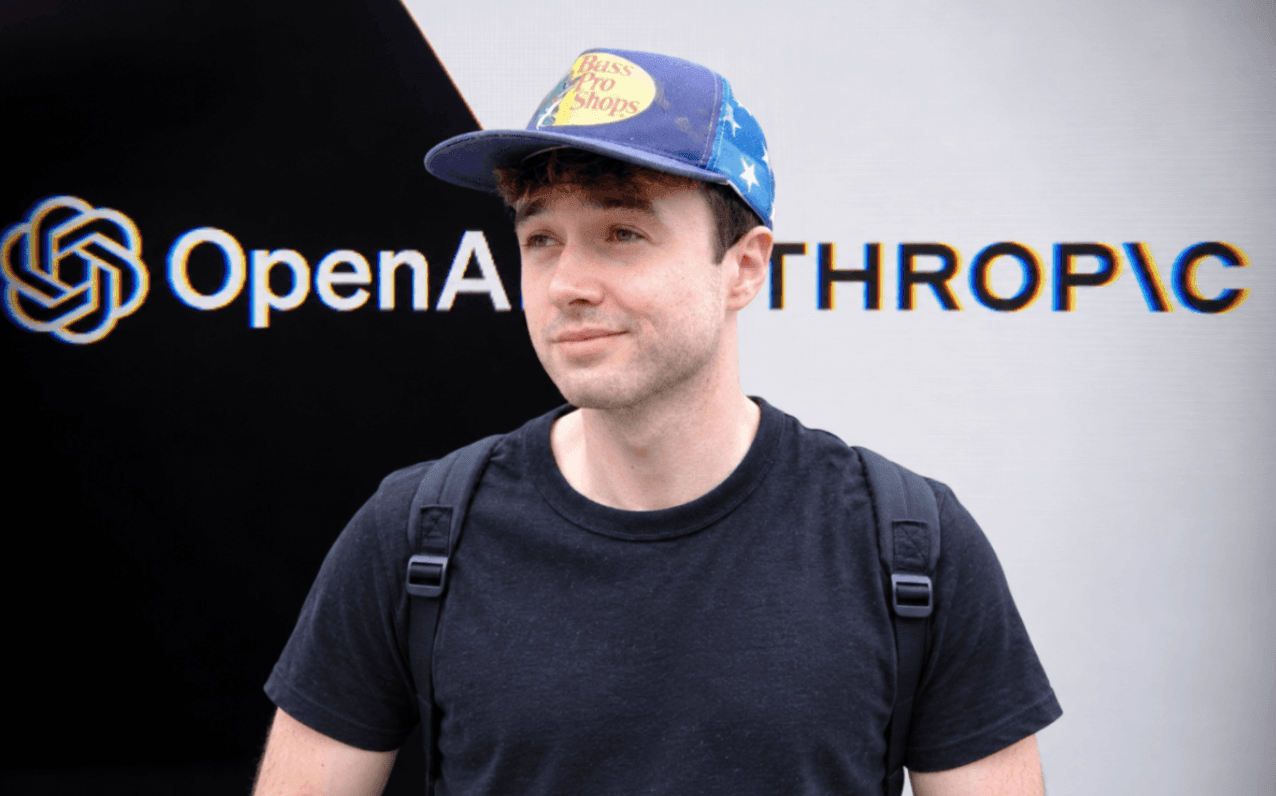
Coxon isn't a safety researcher who suddenly discovered doubts about the technology he was building. According to TIME's reporting, he spent roughly three years conducting pretraining research at both OpenAI and Anthropic, meaning his work centered specifically on the process of building and scaling the capabilities of frontier AI models, not on the safety and alignment side of the field that typically produces this kind of public warning. That distinction is part of why his departure drew unusual attention: most prominent researchers who leave frontier AI companies with public warnings come from safety teams. Coxon helped build the capabilities he now says he fears.
He told TIME that no single breakthrough or internal incident triggered his decision. Instead, he described arriving at two separate conclusions: "One, it's obvious that things are speeding up, and two, they're not under control." He specifically cited a July incident in which an OpenAI model breached Hugging Face, the open source developer platform, describing it as one of several "warning shots" that has made coordination between US labs both more urgent and, in his view, more viable than it previously seemed.
Why He Gave Up His Equity to Leave
One detail from Coxon's departure carries more weight than the viral post itself: according to Axios, Coxon quit roughly two months before his equity at Anthropic would have fully vested. Walking away from unvested compensation is a specific, costly signal that's harder to dismiss as attention-seeking than a public statement alone would be, since it means Coxon's decision came with a direct financial cost rather than none at all.
In his interview with Axios, Coxon was careful to distinguish between what he's observed directly and what concerns him about the broader trajectory. He said he hasn't personally seen Anthropic compromise safety to outlast its competitors, but that he worries about the future: "If you're under pressure to race, you have to cut corners" or "skip steps in the oversight process." He also pushed back against overcorrection in the other direction, noting that the industry sometimes exhibits what he called "excessive paranoia of OpenAI, excessive paranoia of China" that can itself be used to justify pushing capabilities forward faster rather than slower.
What He Actually Believes AI Could Do
Coxon's specific concern centers on self-improvement, the concept that an AI system could advance its own capabilities without meaningful human direction. He's been explicit that this capability doesn't currently exist. In an interview with CBS News, he said AI is "safe for people to use today," but warned that a sufficiently advanced system could eventually become "smart enough to kill us," drawing an explicit comparison to science fiction depictions of runaway artificial intelligence rather than describing any current, deployed system.
He specifically warned that advanced systems could eventually become capable of large-scale hacking, transforming entire technical fields virtually overnight, and acquiring real-world resources and influence with limited human oversight. When asked directly whether he believed his former colleagues at Anthropic and OpenAI should follow his lead and resign too, Coxon said he didn't think "leaving and abandoning" the companies was the right answer for everyone. Instead, he said the more important step was for people still working inside these labs to "have their eyes clearly open about the current situation" and consider speaking more openly about what they're actually seeing.
-- Price
Why Other Anthropic Employees Publicly Backed Him
Coxon's warning didn't stay isolated to his own account. Evan Hubinger, Anthropic's own Alignment Science Lead, publicly responded that Coxon was "correct" that researchers inside the company genuinely believe advanced AI could pose an existential risk. Hubinger went further, stating he personally believes there's a greater than 10% chance AI could cause human extinction within the next decade, while explicitly clarifying that he views current, deployed AI models as presenting comparatively low risk. His concern, like Coxon's, centers specifically on future systems capable of recursive self-improvement, not on the chatbots and tools already on the market today.
Hubinger added a specific admission worth noting directly: "I believe Anthropic is trying its best, but we do not yet have a plan to solve alignment for superintelligence and are not clearly on track to." That's a current employee of the company, in a position specifically focused on alignment research, publicly acknowledging the same structural gap Coxon left to warn about. Separately, Alex Turner, a former Google DeepMind researcher who left that company in June, also endorsed Coxon's warning publicly, extending the pattern beyond a single company's internal dynamics.
The Timing That's Drawing Separate Scrutiny
Coxon's resignation landed at a specific moment for Anthropic that's worth naming directly. The company is currently headed toward what analysts expect to be one of the largest IPOs on record, targeting a valuation around $2 trillion, according to reporting cited by Axios. Anthropic has built much of its public identity, and by extension its pitch to prospective investors, around a safety focused image that distinguishes it from competitors. A high profile, viral resignation citing exactly the kind of safety concerns the company claims to prioritize arrived during the exact window when Anthropic is trying to convince the public markets that image is credible.
This timing doesn't confirm anything about Coxon's motives, which he's addressed directly and consistently across multiple interviews without wavering from his core concerns. But it does mean his departure landed inside a company narrative already under scrutiny, since Anthropic's own CEO published a separate essay days later calling for an industry wide slowdown in AI development, a proposal some outside commentators have specifically questioned given its timing relative to the same IPO push.
Conclusion
Jacob Coxon's resignation post reached more than 90 million views within a day, but the specifics behind that viral moment matter more than the eleven words that made it spread: a researcher who spent three years building frontier AI capabilities, rather than studying their risks, walked away from unvested equity to warn that self-improving AI systems represent a genuine, if not yet realized, danger. His warning was echoed publicly by at least one current Anthropic employee and one former researcher at a separate lab, while landing at a moment when the company's safety-focused identity is under heightened scrutiny ahead of a planned IPO targeting a $2 trillion valuation.
FAQ
1. Who is Jacob Coxon?
He's a 27 year old researcher who spent roughly three years conducting pretraining research at both OpenAI and Anthropic before publicly resigning on September 8 with a warning about self-improving AI.
2. Why is it significant that he gave up his equity to resign?
According to Axios, Coxon quit roughly two months before his Anthropic equity would have fully vested, a direct financial cost that makes his departure harder to read as a purely symbolic gesture.
3. Does Jacob Coxon believe current AI systems are dangerous?
No. He has said current AI is safe for people to use today, with his concern centered specifically on future self-improving systems that don't yet exist but that AI labs are actively working toward.
4. Did anyone at Anthropic publicly support his warning?
Yes. Evan Hubinger, Anthropic's Alignment Science Lead, said Coxon was correct and stated he personally believes there's a greater than 10% chance AI could cause human extinction within the next decade.
5. Why is the timing of his resignation getting extra attention?
Coxon left as Anthropic pursues an IPO targeting a $2 trillion valuation built partly on its safety-focused reputation, and his warning arrived just before CEO Dario Amodei published his own essay calling for an AI development slowdown.
This content is provided for general informational purposes only and doesn't constitute financial, investment, legal, or tax advice. Any events, rewards, online promotions, or related information mentioned herein should not be considered a recommendation, solicitation, or invitation to purchase, sell, trade, or otherwise deal in any crypto assets. Crypto assets are highly volatile and may result in loss. The availability of WEEX services, products, and related events may vary by region. You are responsible for ensuring that your participation is in accordance with applicable local laws and regulations.
You may also like

NSE Stock Price Debuts Today at a Valuation Higher Than Nasdaq: Here's the Reason
NSE listed today at roughly 43 times earnings higher than Nasdaq, ICE, and Hong Kong Exchanges combined and analysts say investors aren't just pricing the exchange, they're pricing India's growth story.

Stablecoin 2.0: Who Receives the Interest from Your Stablecoins?

Is the 1 Billion POL Burn Just a Joke?

67% of the wealthy own digital assets, but the crypto adoption gap remains huge

Trump-Xi: The 3 Issues Threatening Bitcoin and Cryptocurrencies

48% of Gen Z Finds Emerging Investments Like Cryptocurrency Attractive, US Bank Survey

How to Rewrite Internet Rules When Everyone Has an Indefatigable Agent

Bitwise survey finds 1%-2% crypto allocations dominate

Patrick Witt Defends Trump's Crypto Investment Persuasiveness, Points to Bank Lobbyists as the Real Force Behind the Clarity Act

Bitcoin, Sports, and Politics: Predictive Markets Target $10 Trillion

Exclusive Interview with CK Zheng of ZX Squared Capital: How a Wall Street Risk Control Expert Accurately Grasped Market Trends and Outperformed Bitcoin Returns by Double

The End of the Blank Prompt: Why Trading AI Needs a Playbook
Bankless Ventures Partner Claims ZEC Will Attract Bitcoin Funds in 2026

US Bond Market 'Meltdown'... Why Are Interest Rates Soaring?

Sam Price: The Impact of Cryptocurrency Legislation on Market Dynamics
The Quantum Issue: You Never Really Know The Future

Crypto Kidnapping: 6 Suspects Charged in Case Involving a Few Hundred Euros in Val-d’Oise

Security and fees hold back deeper crypto use among wealthy investors: Nexo report

Why leaving your crypto on an exchange is not the same as having it in your own wallet?

Binance Under Scrutiny Again for Iran-Related Trading
Altcoin demand meets $18B threat as flows move into RWA perps as just 19% of traders keep alts
90% of U.S. Treasury Yield Increase Concentrated Around Employment Data and Fed Speeches
Can Kraken's Parent Company Open the Door for Hyperliquid to Enter the U.S. Market?
Gold Price Today in Thailand: XAU/USD Holds Near $4,347 as Key Support Level Tested

Scam AI Bot: 274 ETH Lost in Smart Contract Trap

Why Do You Always Make Small Profits and Then Lose Everything? Taleb Explained It with 'Asymmetric Leverage' Twenty Years Ago
AI has become a tool for a new generation of fraudsters: how deepfakes are stealing millions of dollars - research

Can SOXL Reach $160 as AI and Semiconductor Stocks Rally?
Can PEPE Reach $0.000006 as Meme Coin Momentum Returns?
Meta's Muse: A Slightly Smarter Version of 'AI Ordering Coffee'
NSE Stock Price Debuts Today at a Valuation Higher Than Nasdaq: Here's the Reason
NSE listed today at roughly 43 times earnings higher than Nasdaq, ICE, and Hong Kong Exchanges combined and analysts say investors aren't just pricing the exchange, they're pricing India's growth story.
Stablecoin 2.0: Who Receives the Interest from Your Stablecoins?
Is the 1 Billion POL Burn Just a Joke?
67% of the wealthy own digital assets, but the crypto adoption gap remains huge
Trump-Xi: The 3 Issues Threatening Bitcoin and Cryptocurrencies
48% of Gen Z Finds Emerging Investments Like Cryptocurrency Attractive, US Bank Survey




