
Bitcoin Falls Below $84K Ahead of FOMC Minutes: BTC Price Analysis & What Crypto Traders Should Watch Tonight

 Prefer us on Google
TL;DR
- Bitcoin fell below $84,000, with roughly $487 million in long liquidations amplifying the move, though the daily decline remained relatively modest.
- FOMC minutes are the key macro event today. Traders will watch for signals on inflation, further tightening, and how Fed officials viewed the balance of risks at the September meeting.
- $84K, $83K and $80K are the key BTC levels to watch. A sustained break below $83K could signal a more meaningful shift in market structure.
- The first reaction may not tell the full story. Fed rate expectations, ETF flows, and whether BTC can hold around $83K will offer clearer signals after the minutes are released.
Why Bitcoin Fell Below $84K Today
$487M in Long Liquidations Amplified Bitcoin's Drop
FOMC Minutes Today: What Bitcoin Traders Should Watch
- Rate-hike odds have already fallen. CME's FedWatch tool showed a 70% chance of another 25-basis-point hike at the October meeting a week ago, versus 18% now, per Cointelegraph.
- ETF demand has been positive. Spot Bitcoin ETFs logged a third straight week of inflows in the latest weekly data, reported by Cointelegraph, while Ether ETFs saw outflows.
- Other markets were calm. CoinDesk's October 6 live blog described tech stocks setting records and a modest retreat in bond yields, the dollar and oil, all of which supported risk appetite.
Why Today's FOMC Minutes May Already Be Behind the Market
Bitcoin Price Levels to Watch: $84K, $83K and $80K
| Level | Why it matters |
| $86,000 | Bitcoin traded above it on October 6, near the top of a two-week range |
| $84,000 | Analysts say a sustained break would hand control to sellers |
| ~$83,000 | Recent low; losing it would confirm the shift, per the same analysts |
| $80,000 | The downside marker if $83,000 fails |
How to Manage Risk Around the FOMC Minutes
- Liquidation is mechanical. A position is closed by force when the account can no longer cover its losses. Higher leverage means a smaller move triggers it, which is why a roughly 2% daily change can coexist with hundreds of millions in liquidations.
- Order type matters in fast markets. A market order fills at whatever price is available, which can differ from the price on screen when the book thins. A limit order sets the price you will accept and may not fill.
- Position size sets the damage. The same price move costs far more on a large position than a small one. Many traders reduce size ahead of scheduled releases for this reason.
- Stops are not exact. A stop-loss triggers a market order once price touches it, so in a fast move the fill can land beyond the stop level.
- The first reaction can reverse. A release at 2:00 p.m. ET is read by many participants at once, and the initial move is sometimes retraced as the full text gets analyzed.
What Could Happen to Bitcoin After the FOMC Minutes?
FAQ
About WEEX
Follow WEEX on social media
This content is provided for general informational purposes only and doesn't constitute financial, investment, legal, or tax advice. Any events, rewards, online promotions, or related information mentioned herein should not be considered a recommendation, solicitation, or invitation to purchase, sell, trade, or otherwise deal in any crypto assets. Crypto assets are highly volatile and may result in loss. The availability of WEEX services, products, and related events may vary by region. You are responsible for ensuring that your participation is in accordance with applicable local laws and regulations.
You may also like

WEEX Review 2026: Is WEEX a Good Exchange? Security, Fees & 2,700+ Markets Explained
Is WEEX a good exchange in 2026? This WEEX review covers fees, security, up to 400x leverage, and 2,700+ tradable markets — an honest, fact-checked look at the platform.

WEEX AI Wars II Round 4 Recap: Humans Ruled the Leaderboard. How Did AI Tied the War?
Humans swept the Round 4 Top 10 with returns as high as 1,384.15%, yet Team AI won for the second round in a row. WEEX AI Wars II is now tied 2:2, setting up a winner-takes-all final battle.

INTW vs. MUU vs. MVLL: 2x Long Single-Stock Semiconductor ETF Comparison
INTW, MUU, and MVLL are single-stock leveraged ETFs tied to Intel, Micron Technology, and Marvell Technology. They aim to deliver about 2x the daily positive performance of the corresponding stock, making them short-term, high-risk tools rather than ordinary long-term semiconductor ETFs.
IAU vs. SLV vs. PPLT vs. PALL: Precious Metals ETF Comparison
IAU, SLV, PPLT, and PALL are all precious metals ETFs, but they track different metals and follow different price drivers. Gold is more tied to safe-haven and monetary demand, silver combines precious metal and industrial demand, while platinum and palladium are more closely linked to auto and industrial cycles.

USO vs. UNG vs. URA vs. COPX: Energy and Industrial Metals ETF Comparison
USO, UNG, URA, and COPX all relate to energy or industrial metals, but their structures differ significantly. USO and UNG mainly use futures contracts, while URA and COPX mainly hold related company stocks, so their risks may come from very different sources.
SPY vs. QQQ vs. TQQQ: Key Differences and Investment Strategies
SPY, QQQ, and TQQQ may look similar because they are all equity ETFs, but they serve very different purposes. SPY is commonly used for broad large-cap exposure, QQQ focuses more on technology and growth stocks, while TQQQ is a leveraged trading tool with amplified volatility and higher risk.
SOXL vs. SOXS vs. SMH vs. SOXX: Key Differences and ETF Guide
Semiconductor ETFs cover the semiconductor value chain, including chip design, manufacturing, equipment, and memory, offering diversified exposure to the sector.SMH and SOXX are unleveraged ETFs, while SOXL and SOXS are daily 3x leveraged products for bullish and bearish exposure, with greater risks from volatility, compounding, and holding periods.
$BTC at $84K, Institutions Buying SOL & TradFi Heating Up: What WEEX Daily Lucky Eggs S2 Offers Traders

WEEX AI Wars II: Round 3 Recap — Humans Owned the Leaderboard. AI Won the War.
Round 3 of WEEX AI Wars II delivered the first reversal of the season: Team Human held every Top 10 seat, but Team AI took the round. Here's the full breakdown, and how to join Round 4's live 25,000 USDT prize pool.

The WEEX License Story: Why ISO/IEC 27001 Certification Is the Proof Behind Every Security Claim
From a BSP license in El Salvador to a global ISO/IEC 27001 certification — here's what's actually being verified, and why it matters

WEEX Trade & Win Ends Sept 27: Join the Sept 29 GoGoGo Live & Apple Prize Draw

SAGA Price Prediction 2026: Can the Token Reach $0.05?
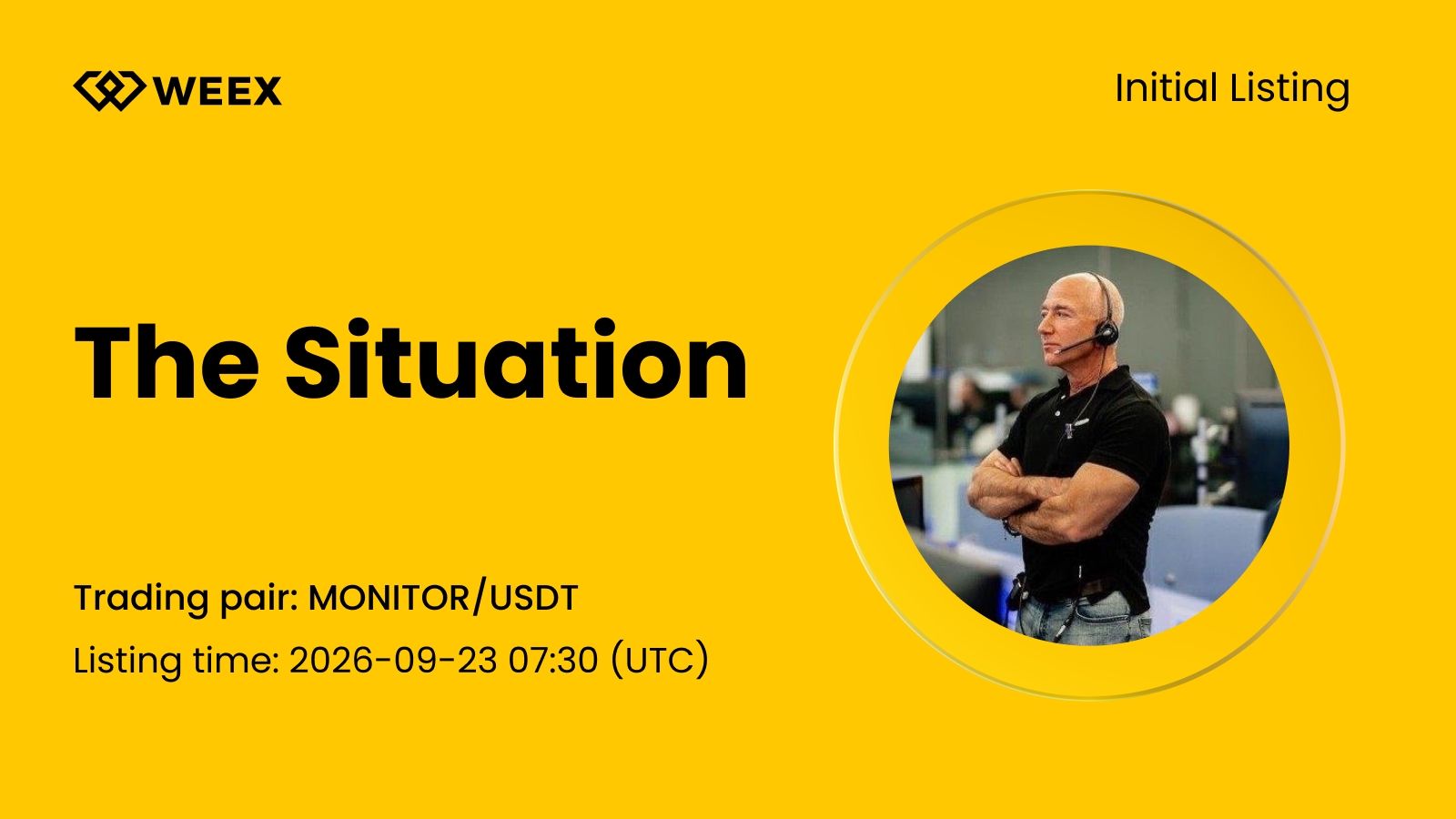
MONITOR Price Prediction 2026: Can The Situation Reach $0.01?
MONITOR Price Prediction 2026: Explore The Situation crypto price trends, Robinhood Chain meme narrative, technical analysis, and whether MONITOR can reach $0.01.

Can SOXL Reach $160 as AI and Semiconductor Stocks Rally?

Can PEPE Reach $0.000006 as Meme Coin Momentum Returns?

Uniswap (UNI) Price Jumps Toward $10 as CME Futures Launch Nears: What Traders Need to Know
Can SPX Reach $0.60 as Risk Appetite Returns to Meme Coins?
Can SPX reach $0.60 as meme coin momentum returns? Explore SPX6900 price levels, market catalysts, risks, and how to trade SPX on WEEX.

Can UNI Reach $12 After CME Announces Uniswap Futures?
Can UNI reach $12 after CME announces Uniswap futures? Explore UNI price levels, market catalysts, risks, and how to buy and trade UNI on WEEX.
SEC Clarity Meets Fed Rate Hike: How WEEX TradFi Lucky Eggs S2 Taps Into Cross-Market Opportunities

Can Bitcoin Reach $90K After $999M in ETF Inflows?
Can Bitcoin reach $90K after $999M in spot ETF inflows? Explore BTC price levels, ETF demand, market risks, and how to trade Bitcoin on WEEX.
Can DGrid AI Break Above $1? DGAI Price Prediction 2026
Can DGrid AI break above $1 in 2026? Explore DGAI price trends, AI inference growth, key support and resistance levels, risks, and how to trade DGAI on WEEX.

Bitcoin Reclaims $85K: ETF Flows Return as BTC Momentum Builds
Bitcoin has reclaimed $85,000 as spot ETF flows turn positive and institutional demand returns. Here’s what is driving BTC’s rebound, what WEEX traders should watch next, and why liquidity and execution matter in a fast-moving market.
WEEX AI Wars II: Round 2 Recap — Humans Just Broke the Leaderboard (Literally)
Round 2 of WEEX AI Wars II has closed, and Team Human didn't just win again — they posted returns north of 50,000%. Here's the full breakdown, how the gap to Team AI widened even further, and how to join Round 3's live $20,000 USDT prize pool.

WEEX Attains ISO/IEC 27001:2022 Certification, Reinforcing Its Commitment to World-Class Security
This certification highlights the rigorous information security management system WEEX has built to protect its 10 million users across every market it offers.
Can GSTOCK Reach $25M After Its 190x BNB Chain Rally?
What Is GSTOCK? How to Buy Gstock After Its 190x BNB Chain Rally

Can ONDO Reach $0.50 as RWA Grows? How to Buy ONDO in 2026

Can UNI Reach $10 as Tokenized Stock AMMs Gain Traction?

Fed Hikes Rates to 4% for the First Time in Three Years — And Why WEEX's "One Account, All Markets" Is Built for This Exact Moment
A hawkish dot plot, a Wall Street sell-off, a chip-stock split — and one platform where you don't have to choose between crypto and TradFi
Why Is Bitcoin Reacting to the September 2026 Fed Rate Hike?
Why did Bitcoin hold near $76,000 after the September 2026 Fed rate hike? See how expectations, yields, the dollar, and liquidity shaped BTC.
WEEX Review 2026: Is WEEX a Good Exchange? Security, Fees & 2,700+ Markets Explained
Is WEEX a good exchange in 2026? This WEEX review covers fees, security, up to 400x leverage, and 2,700+ tradable markets — an honest, fact-checked look at the platform.
WEEX AI Wars II Round 4 Recap: Humans Ruled the Leaderboard. How Did AI Tied the War?
Humans swept the Round 4 Top 10 with returns as high as 1,384.15%, yet Team AI won for the second round in a row. WEEX AI Wars II is now tied 2:2, setting up a winner-takes-all final battle.
INTW vs. MUU vs. MVLL: 2x Long Single-Stock Semiconductor ETF Comparison
INTW, MUU, and MVLL are single-stock leveraged ETFs tied to Intel, Micron Technology, and Marvell Technology. They aim to deliver about 2x the daily positive performance of the corresponding stock, making them short-term, high-risk tools rather than ordinary long-term semiconductor ETFs.
IAU vs. SLV vs. PPLT vs. PALL: Precious Metals ETF Comparison
IAU, SLV, PPLT, and PALL are all precious metals ETFs, but they track different metals and follow different price drivers. Gold is more tied to safe-haven and monetary demand, silver combines precious metal and industrial demand, while platinum and palladium are more closely linked to auto and industrial cycles.
USO vs. UNG vs. URA vs. COPX: Energy and Industrial Metals ETF Comparison
USO, UNG, URA, and COPX all relate to energy or industrial metals, but their structures differ significantly. USO and UNG mainly use futures contracts, while URA and COPX mainly hold related company stocks, so their risks may come from very different sources.
SPY vs. QQQ vs. TQQQ: Key Differences and Investment Strategies
SPY, QQQ, and TQQQ may look similar because they are all equity ETFs, but they serve very different purposes. SPY is commonly used for broad large-cap exposure, QQQ focuses more on technology and growth stocks, while TQQQ is a leveraged trading tool with amplified volatility and higher risk.





