
Energy Crisis in the US Threatens AI, but Spares Nvidia and Broadcom

 Prefer us on Google


The boom in artificial intelligence has created a problem that money alone cannot solve: a lack of electricity. The billions of dollars poured into building data centers in the United States are hitting a power infrastructure that cannot keep pace with demand. This bottleneck is beginning to reshape the map of winners and losers in the semiconductor chain.
A report from Morgan Stanley published on Monday estimates that data center developers in the US will face a net energy deficit of 34% by 2028, equivalent to 32 gigawatts. To put this into perspective, this represents more than the entire installed wind generation capacity of Brazil. The number highlights that the problem is not marginal: it is structural.
However, the central conclusion of the bank is surprising for its selective optimism. Nvidia and Broadcom, the two largest suppliers of high-performance chips for AI, are relatively protected against this scenario. The real risk falls on the secondary links in the chain: manufacturers of memory chips, optical components, power management, and analog processors.
Why Nvidia and Broadcom Escape the Energy Bottleneck
Morgan Stanley's logic is relatively simple. Nvidia and Broadcom have privileged visibility over the allocation of their chips, the geographical expansion of customers, and the coordination between data centers, suppliers, and the energy supply chain. This means that these companies can anticipate where installation capacity will be available and direct their production accordingly.
In practice, the largest buyers of Nvidia's GPUs, such as Microsoft, Google, Amazon, and Meta, are precisely the data center operators with the greatest negotiating power with energy utilities and local governments. These hyperscalers have already secured long-term supply contracts and are geographically diversifying their operations, including outside the US.
The bank stated that it does not see energy bottlenecks jeopardizing Nvidia or Broadcom's revenue forecasts for 2027. The analysis reinforces a thesis that the financial market is already partially pricing in: these two companies operate at such a high level of demand that even infrastructure constraints do not reduce the backlog of orders; they merely redistribute where the chips will be installed.
Who Pays the Bill: The Fragile Links in the AI Chain
If chip production capacity cannot be deployed due to a lack of energy in data centers, customers may delay deliveries or cancel orders. The components most exposed to this risk are precisely those that depend on high volumes to maintain healthy margins.
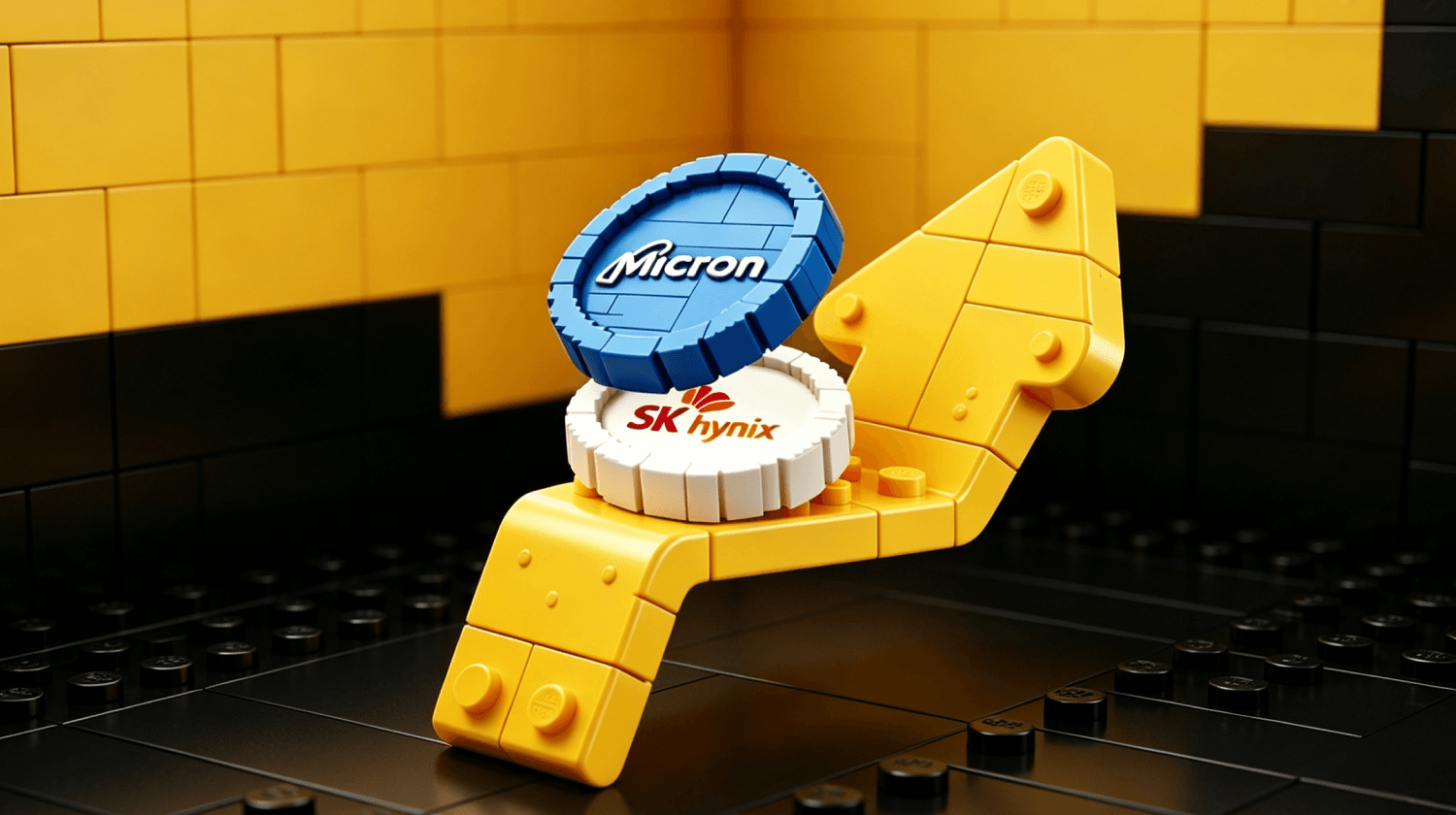
Memory chip manufacturers, such as Micron and SK Hynix, operate with narrower margins and rely on the pace of new data center construction to keep demand warm. The same applies to suppliers of optical components, essential for connectivity between servers, and to energy management companies and analog chips. As we analyzed in our technology coverage on the portal, the semiconductor chain functions as an integrated ecosystem, and a delay in one link propagates cascading effects.
Goldman Sachs also signaled increasing restrictions on the expansion of data centers in the US, although with a slightly different reading. The bank expects limited impact in the short term, partly due to political resistance to measures that would curb investments in AI. Meanwhile, Morgan Stanley sees more concrete challenges related to labor, energy supply, and regulatory hurdles.
The 32 GW Deficit and What It Means for Investors
The projected deficit of 32 GW by 2028 is not just a technical curiosity. It has direct implications for those investing in technology and infrastructure companies. The construction of new generation plants, transmission lines, and substations takes years. Even with the billion-dollar incentives from federal and state governments, energy supply is not expanding at the same pace as the demand for computing.
This mismatch is already generating concrete movements. Companies like Microsoft have closed contracts to reactivate nuclear plants. Amazon has invested in solar and wind generation dedicated to its data centers. Google has signed agreements for geothermal energy purchases. As we have followed in the finance section, the energy sector has perhaps become the biggest indirect beneficiary of the AI boom, with shares of utilities and electrical infrastructure companies accumulating significant gains over the past 12 months.
For investors, the reading is that the thesis of Nvidia and Broadcom remains intact in the medium term, but the risk has migrated to the second and third layers of the chain. Companies that seemed like safe bets in the AI cycle, such as HBM memory manufacturers and network equipment suppliers, now carry an additional risk of delays in deployment that was not on the radar six months ago.
-- Price
AI and Energy: A Bottleneck That Is Here to Stay
The scenario described by Morgan Stanley is not temporary. The energy demand of generative AI is growing exponentially with each new generation of models. Training GPT-4 consumed an estimated 50 GWh of electricity. Future models are expected to demand orders of magnitude more. And inference, the everyday use of models by billions of people, adds a continuous layer of consumption that did not exist before.
The energy issue, therefore, has ceased to be a peripheral risk and has become the main limiter of the speed of AI expansion in the United States. Countries that can solve this equation first, whether through an abundance of natural resources or regulatory agility, are likely to capture a disproportionate share of investments in AI infrastructure. As we discussed in our coverage of the technology sector, Brazil appears as a relevant candidate in this race, given its predominantly renewable energy matrix.
For those following the financial market, the message is clear: the AI narrative remains powerful, but risks are redistributing along the chain. Nvidia and Broadcom continue to be the most defensive positions within the theme. The rest of the ecosystem needs to prove that it can deliver growth even with energy working against it.
This content is provided for general informational purposes only and doesn't constitute financial, investment, legal, or tax advice. Any events, rewards, online promotions, or related information mentioned herein should not be considered a recommendation, solicitation, or invitation to purchase, sell, trade, or otherwise deal in any crypto assets. Crypto assets are highly volatile and may result in loss. The availability of WEEX services, products, and related events may vary by region. You are responsible for ensuring that your participation is in accordance with applicable local laws and regulations.
You may also like

BTC needs stronger institutional inflows to reach 90000-93000

Bloomberg Strategist Claims Bitcoin is a Bad Investment: "It's at the Same Level as the 2017 Peak Against the Nasdaq-100"

Crypto Influencer Kidnapped in Montreal - Trial Recaps Events from 2021

Ecash Ecosystem Rises To Challenge In The Defense Of Decentralized Custody

Flash Loan Attacks Drained $1.2B From DeFi Between 2020 and 2024: Study

Kalshi Withdraws Application for PEPE Perpetual Futures Listing

Ethereum’s proposed 3x ETF could reach CME’s futures threshold with just $362 million

Trump's $5,000 Checks Could Channel Billions into Bitcoin and Cryptocurrencies!

Microsoft Stock Is Down Over the Past Year While Google and Apple Soared: Can Copilot's 30 Million Users Change That?

Will Meta Stock Fall in October Again? What the Last Five Octobers Show After Muse's 27% Rally

Solana launches tool to settle bank trades in seconds

How Are RWA Assets Tokenized in Hong Kong?

Cardano just added the kind of token controls Wall Street wants and DeFi may hate

Monad's Outlook on the Korean Virtual Asset Market in 2030 – Tiger Research
HYPE eyes $100 after listing on Bloomberg Terminal and new $14.6M buyback
S&P Global Targets Cryptocurrency Fund Risks with New Framework

Ethereum Mainnet Completes First Atomic Cross-Chain Transaction from L1 to L2

France risks being "strangled by interest rates," warns the governor of the Bank of France
Castle Securities Analyzes US Debt Sell-off, AI Investment Boosts Capital Demand

458,000 BTC Held by States, Number of Countries with Bitcoin Rises to 23

All-In Analysis of the Next Phase of AI: Model Convergence and Value Shifting to Workflows
"Crypto Mom" Hester Peirce Departs, SEC Regulation Enters Two-Person Era
Peter Thiel Interview: After Fifty Years of Stagnation, Is AI the Last Self-Salvation of Civilization?
![[ETH Letter] Ethereum Issuance Reduction EIP Withdrawn... "Monetary Policy Requires Greater Consensus"](/public-static/30_f8d737795f.png?format=avif)
[ETH Letter] Ethereum Issuance Reduction EIP Withdrawn... "Monetary Policy Requires Greater Consensus"

Nasdaq Rises 1.05% to New High, 10-Year U.S. Treasury Yield Rises to 5.34%

Cryptocurrency Shifts to a New Task: Not Just Launching Products, but Retaining Users

DeFi Development Corp Adds $3 Million in Solana as SOL Buys Slow

NVIDIA Stocks Available for 24-Hour Trading in the U.S.

Embrapa and Chinese Institutions Form Partnership to Strengthen AI and Blockchain for Family Farming
Security Through Obscurity: The Window Has Closed
BTC needs stronger institutional inflows to reach 90000-93000
Bloomberg Strategist Claims Bitcoin is a Bad Investment: "It's at the Same Level as the 2017 Peak Against the Nasdaq-100"
Crypto Influencer Kidnapped in Montreal - Trial Recaps Events from 2021
Ecash Ecosystem Rises To Challenge In The Defense Of Decentralized Custody
Flash Loan Attacks Drained $1.2B From DeFi Between 2020 and 2024: Study
Kalshi Withdraws Application for PEPE Perpetual Futures Listing
Contents
Latest articles






Latest coin listings on WEEX


