
Oura postpones $2.2 billion IPO, exposing market fragility

 Prefer us on Google


Oura, the Finnish manufacturer of the smart ring that has become a craze among health and biohacking enthusiasts, has indefinitely suspended its initial public offering that would have raised up to $2.2 billion. The company cited "uncertainty in the IPO market" and did not provide a timeline for resumption. In practice, this is yet another sign that appetite for new listings remains weak, even when the fundamentals of the company in question are solid.
The offering planned for 55 million shares at a price between $40 and $44 per share, which would have placed Oura at a valuation of up to $15 billion. For a company that was valued at $5.2 billion less than two years ago, the jump would have been remarkable. But the market window did not cooperate.
A healthy company that chose to wait
What makes Oura's case particularly revealing is that it is not a struggling company. On the contrary. The company reports 5.7 million paying members, an increase from 5 million at the end of June. The expectation is that revenue for the fiscal year 2026 will grow by 90% compared to the previous period, when it reached $907.9 million.
The gross margin from subscriptions, which already account for about 20% of revenue, is 89%. This is the kind of metric that investors love to see in recurring revenue models. Hardware still generates most of the revenue, but the trajectory of monetization through software shows maturity in the business model.
Tom Hale, CEO of Oura, stated that the company has "the luxury of choosing the right moment" to go to market. With $372 million in cash at the end of June and no immediate need for capital, the decision makes sense. The company planned to use the IPO proceeds primarily to cover tax obligations related to stock granted to employees, not to finance operations.
What the withdrawal reveals about the IPO market
Oura's suspension is not an isolated case. The market for initial public offerings in technology is experiencing a prolonged period of caution. Since the monetary tightening cycle began in 2022, several high-growth companies have opted to remain private, raising capital in private rounds instead of facing the volatility of the stock markets.
Oura's own fundraising trajectory illustrates this phenomenon. In October of last year, the company raised $900 million in a round led by Fidelity, reaching a valuation of $11 billion. This was practically double the $5.2 billion from the previous round, conducted less than a year earlier. When the private market offers liquidity and generous valuations, the incentive to face public scrutiny diminishes.
The problem is that this logic has limits. Forerunner Ventures, an early-stage investor, intended to sell its entire 9.3% stake in the offering, which would yield approximately $1.2 billion considering the midpoint of the price range. With the postponement, that return is now frozen. Other shareholders seeking liquidity will also have to wait.
Wearables on the rise, but public market in a waiting pattern
The health wearables segment is experiencing a moment of strong demand. The recently launched Oura Ring 5 has received good reception, according to the company itself. The global market for health wearables is expected to exceed $60 billion in the coming years, driven by consumers increasingly interested in continuous monitoring of biometric data.
Oura competes with giants like Apple and Samsung, but occupies a different niche. The ring format is more discreet and less intrusive than a smartwatch, appealing to a specific consumer profile. The bet on recurring subscriptions to unlock advanced features for sleep, activity, and recovery analysis has created a model that financial market analysts consider scalable.
Still, the case reinforces a dynamic that repeats in the technology ecosystem. Companies with strong fundamentals, significant growth, and attractive margins remain reluctant to go public. Macroeconomic volatility, uncertainty about monetary policy, and mixed performance of recent IPOs create an environment where "waiting" seems more rational than "testing."
-- Price
What this means for investors
For those closely following the technology market, the message is clear: the best growth opportunities remain concentrated in the private market. Funds like Fidelity, which led Oura's $900 million round, capture the appreciation before retail investors have access to the stock.
When and if Oura finally goes to market, a significant portion of the appreciation will have already been realized. The company went from $5.2 billion to $11 billion in less than a year in the private circuit. The trend of technology companies remaining private for longer is not new, but Oura's case is a reminder that this phenomenon continues to intensify.
The underlying issue is structural. As long as there is abundant capital in the private market and uncertainty in the public, companies with Oura's financial health will continue to choose the timing. And that moment, according to the data, has not yet arrived.
This content is provided for general informational purposes only and doesn't constitute financial, investment, legal, or tax advice. Any events, rewards, online promotions, or related information mentioned herein should not be considered a recommendation, solicitation, or invitation to purchase, sell, trade, or otherwise deal in any crypto assets. Crypto assets are highly volatile and may result in loss. The availability of WEEX services, products, and related events may vary by region. You are responsible for ensuring that your participation is in accordance with applicable local laws and regulations.
You may also like

Bitcoin: Strategy Acquires Another 334 BTC, Raising Its Reserve to 848,000

SNDK Stock Fell 3.8% After a 650% Rally: Does a Single-Digit P/E Make Sandisk Cheap or Just Cyclical?

Oil Futures Hold Above $100 After Houthis Claim Aramco Attacks: What Is Confirmed and What Is Not

MSTR Stock Slips After Strategy Buys Just 334 Bitcoin: Why It Spent More on Preferred Shares Than on BTC

INTC Stock Drops After TSMC Terafab Talks: Is Intel's Biggest Outside Endorsement at Risk?

Who Will Aave Hand Its Brand Over To? The DAO Asset Ownership Dispute Behind the Foundation Proposal
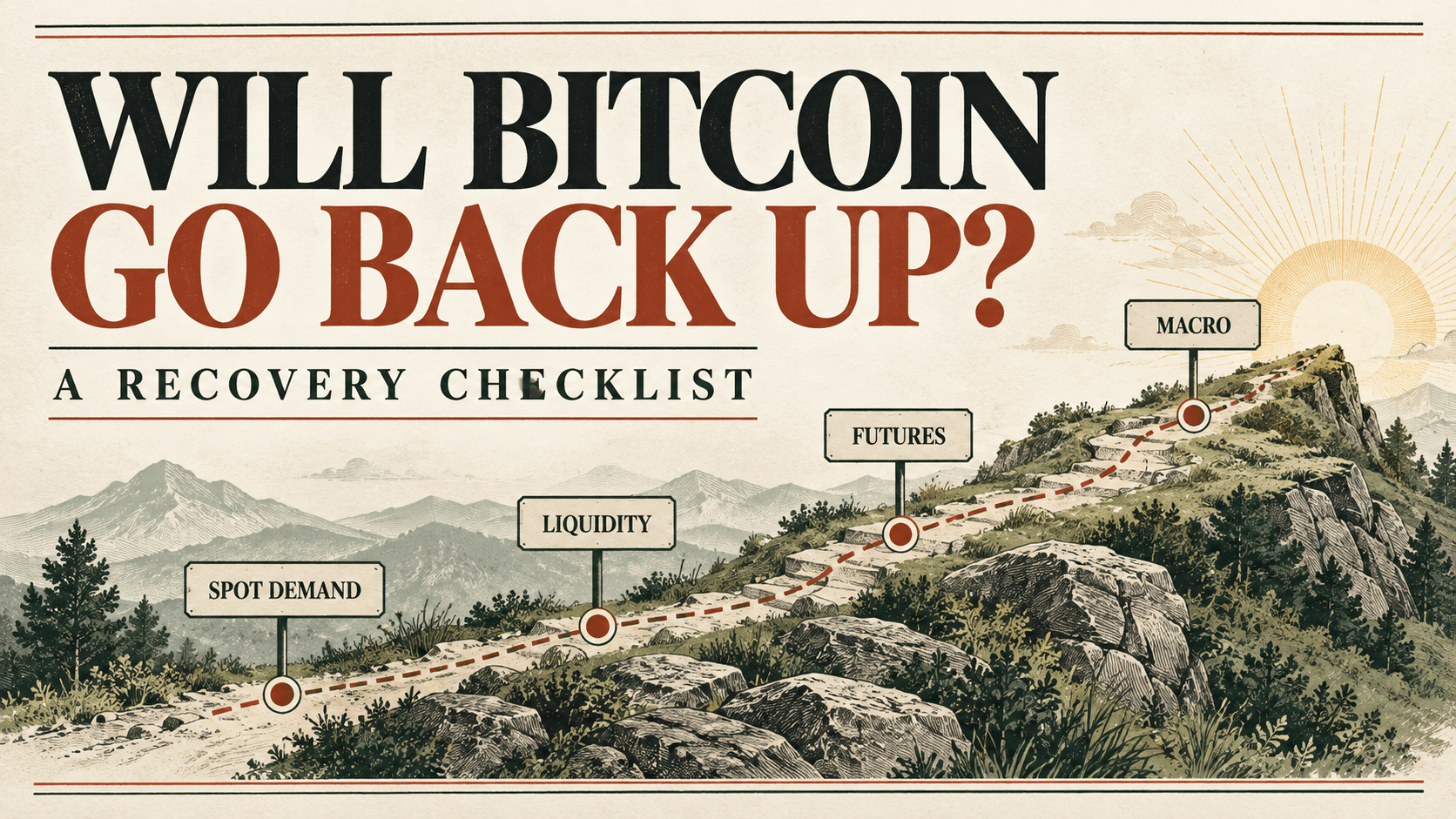
Will Bitcoin (BTC) Go Back Up in 2026? How to Tell a Real Recovery From a Short-Covering Bounce
Will Bitcoin go back up in 2026? Learn how spot demand, ETF flows, crypto liquidity, futures positioning and macro conditions shape a real BTC recovery.
Hyperliquid's Perpetual Futures Listed on Bloomberg Terminal, Increasing Institutional Investor Interest
NSE Stock Price Hits a New Low After IPO: Can National Stock Exchange Shares Recover?
National Stock Exchange of India shares traded near ₹1,741 on October 5, close to a post-listing low of about ₹1,735 and roughly 2.5% below the ₹1,785 IPO price. The stock has now spent more than a week under its issue price, and a recovery depends on retail demand, derivatives volumes and the broader Indian market.

Trump Creates Super Intelligence Force: What Changes in the AI Race
Home-jacking crypto: they threaten to kill a pregnant woman's baby in England

Bitcoin Exchange Withdrawal Rate Declines, Signaling Long-Term Holding

Bitcoin Miners Sign Their Best Month Since January

NFT: Porsche abandons its Web3 project around the 911
Former The Arena Advisor Accuses ROVE of Salary and Token Quota Arrears

Movement of Old Ethereum and Limited Exchange Reserves
Plunging GPU prices threaten AI hosts, and new hedges step in
Kalshi Hits the Brakes as Regulators Target User Incentives in Prediction Markets
Global Dollar: Is the Fed's Hegemony Breaking?
Economy: Christine Lagarde Calls for Regulation of AI Agents Already Paying in Stablecoins
XST Coin Surges Again: Can XSolut Price Recover to $0.01?
XST coin climbed toward $0.002038 on October 2, 2026, up roughly 77% over seven days. Reaching $0.01 would require a gain of about 391% from that level, and a separate September analysis flagging contract tracking concerns is worth understanding before treating any XST price chart as reliable.
Why Would a Public Blockchain Stop? Understanding Blockchain Consensus from Cosmos's 25-Hour Downtime

Fed’s Jefferson signals patience as October rate hike odds fall to 23%

New York and Wyoming Sign Agreement to Coordinate Cryptocurrency Company Regulation
The Quantum Issue: Quantum Isn't Coming For Your Bitcoin

PA Daily | Fed's Kashkari Expects One More Rate Hike This Year; OpenAI Plans to Raise $30 Billion, Valuation Reaches $1.4 Trillion

Why Did Google Stock Reverse After Gemini 4 Argon: What's Actually Going On
PTT Stock: A Pipeline Shutdown Hit the Same Day Profit Jumped 23%
OpenAI and Anthropic Targeted by the FTC: Investigation Launched into AI Safety
Crypto: Aave V4 Surpasses One Billion Dollars, Driven by Multisig
Bitcoin: Strategy Acquires Another 334 BTC, Raising Its Reserve to 848,000
SNDK Stock Fell 3.8% After a 650% Rally: Does a Single-Digit P/E Make Sandisk Cheap or Just Cyclical?
Oil Futures Hold Above $100 After Houthis Claim Aramco Attacks: What Is Confirmed and What Is Not
MSTR Stock Slips After Strategy Buys Just 334 Bitcoin: Why It Spent More on Preferred Shares Than on BTC
INTC Stock Drops After TSMC Terafab Talks: Is Intel's Biggest Outside Endorsement at Risk?
Who Will Aave Hand Its Brand Over To? The DAO Asset Ownership Dispute Behind the Foundation Proposal
Contents
Latest articles




Latest coin listings on WEEX


