
RBA Raises Interest Rates to 4.60%, Inflation Pressures Extend Global Tightening Cycle

 Prefer us on Google


On September 29, global inflation pressures came back into focus. The Reserve Bank of Australia announced an interest rate hike of 25 basis points to 4.60% and indicated that further tightening may be necessary if needed. Despite a cooling in Australia's consumer and housing markets, economic growth and inflation performance remain above expectations. Additionally, the conflict in the Middle East has driven up energy prices, and the demand for AI has led to price increases in technology products, making it difficult for the central bank to relax monetary policy too soon. This reflects that when energy and technology demand jointly push up costs, inflation may still limit the global space for interest rate cuts, even as economic activity gradually slows.
The commodities market is showing deeper supply risks. Deutsche Bank pointed out that the U.S. continues to stockpile copper due to tariff expectations, which is compressing spot supply available in other regions. The bank's extreme scenario estimates that if the hoarding trend continues, copper prices could rise to $22,050 per ton by the second quarter of 2027, although this is not the baseline forecast. What is truly concerning is that global inventory does not equate to freely available supply; when inventory is locked in specific markets, even without a significant increase in demand, spot shortages can drive up prices and further increase cost pressures for grid construction, AI data centers, and manufacturing.
For financial markets, these two developments share a common transmission mechanism: rising energy and raw material prices may delay the decline in inflation, forcing central banks to maintain higher interest rates for a longer period. If companies simultaneously face rising financing and input costs, the discount pressure on valuations for future profits will also increase. Future market focus should not only be on whether central banks will cut rates, but also on whether energy prices, industrial raw material supply, and long-term bond yields are under synchronized pressure. If cost-pushed inflation persists while economic growth gradually slows, global markets will face a dual challenge of stubborn inflation and high funding costs, potentially restricting the liquidity and valuations of risk assets.
-- Price
This content is provided for general informational purposes only and doesn't constitute financial, investment, legal, or tax advice. Any events, rewards, online promotions, or related information mentioned herein should not be considered a recommendation, solicitation, or invitation to purchase, sell, trade, or otherwise deal in any crypto assets. Crypto assets are highly volatile and may result in loss. The availability of WEEX services, products, and related events may vary by region. You are responsible for ensuring that your participation is in accordance with applicable local laws and regulations.
You may also like

DeepSeek Raises $12 Billion in Funding with Tencent and CATL Participating

Google Cloud to Shut Down Blockchain Node Engine and RPC Services on December 15, 2026

Raiffeisen Head Ready to Leave Russia "As Early As Tomorrow"

Crypto: SEC Approves First Leveraged x3 Bitcoin and Ethereum ETFs
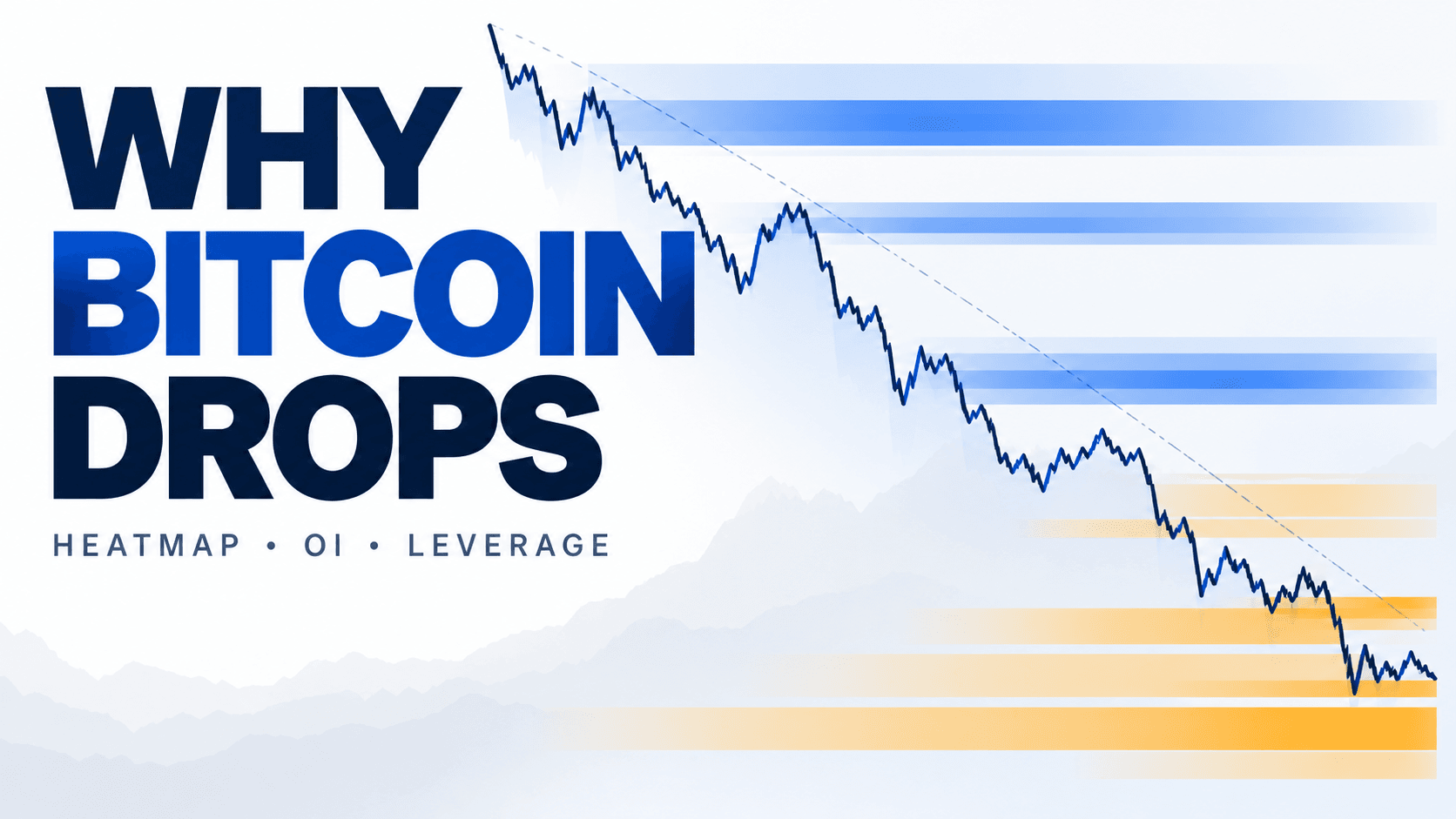
Why Is Bitcoin (BTC) Dropping? How to Read a BTC Liquidation Heatmap Without Guessing the Bottom
Why does Bitcoin drop? Learn how a BTC liquidation heatmap, crypto OI, funding, leverage and market depth can explain sell-offs and false bottoms.
"A National Strategy Can Be Formulated in Six Months" - Policy Calendar Discussed by Masaki Hirakawa
Cash-and-carry: the yield we know before cashing it in

Bank of America Warns: Is the U.S. Stock Market Repeating the 2000 Dot-Com Bubble?

The same Fed rate hike can help stablecoins and hurt Bitcoin borrowers

ESMA proposes ending EU custody and transfer services for non-compliant stablecoins

WALL STREET SPEAKS: Investors Ready to Get Back in the Game, but Indices May Shake in October
Atkins: More SEC Crypto Regulation Proposals Coming Soon
Digital Euro: Can Bitcoin Really Serve as a Bulwark?
Amazon Plans to Lease Nvidia Chips Worth $8 Billion to Optimize Debt

Robinhood stock token volumes nearing SEC exemption cap
Will crypto exchanges/stablecoins soon be taxed in France?

Core Lightning Urges Node Operators to Upgrade to the Latest Version

Cboe to Launch Indefinite Futures for 'Fear Index' VIX, Expanding Territory Beyond Coins to Traditional Assets
Abstract Founder Removes Identification, Core Developer Transfers Funds

Microsoft Stock: Why Michael Burry Is Warning About $3 Trillion in Hidden AI Liabilities
Could Japan trigger another yen carry trade shock for Bitcoin?
Bonk Guy Expects Market to Strengthen, PCE Data Not Fully Priced In
US Inflation (PCE): Bitcoin Bounces Back, but the Fed Remains Cautious
MiCA Does Not Regulate DeFi: The Legal Void of Decentralized Finance

Can Bitcoin Sent to Voice Phishing Scammers Be Stopped Like a Bank?
Anthropic Admits: Its AIs Could Threaten Human Survival

Liquid Network Releases Security Audit Update, Community Demands Missing Bitcoins

OpenAI Proposes Frontier AI Training 'Safety Case' Framework, Recommends Completing Safety Documentation Before Launching

Quantum Computing Reaches Historic Turning Point: Moving Beyond 'Physical Experiments' to Supply Chain and Manufacturing as Key Determinants

Are Stablecoins Safer Than Banks? Brian Armstrong Sparks the Debate
DeepSeek Raises $12 Billion in Funding with Tencent and CATL Participating
Google Cloud to Shut Down Blockchain Node Engine and RPC Services on December 15, 2026
Raiffeisen Head Ready to Leave Russia "As Early As Tomorrow"
Crypto: SEC Approves First Leveraged x3 Bitcoin and Ethereum ETFs
Why Is Bitcoin (BTC) Dropping? How to Read a BTC Liquidation Heatmap Without Guessing the Bottom
Why does Bitcoin drop? Learn how a BTC liquidation heatmap, crypto OI, funding, leverage and market depth can explain sell-offs and false bottoms.
"A National Strategy Can Be Formulated in Six Months" - Policy Calendar Discussed by Masaki Hirakawa
Contents
Latest articles





Latest coin listings on WEEX


